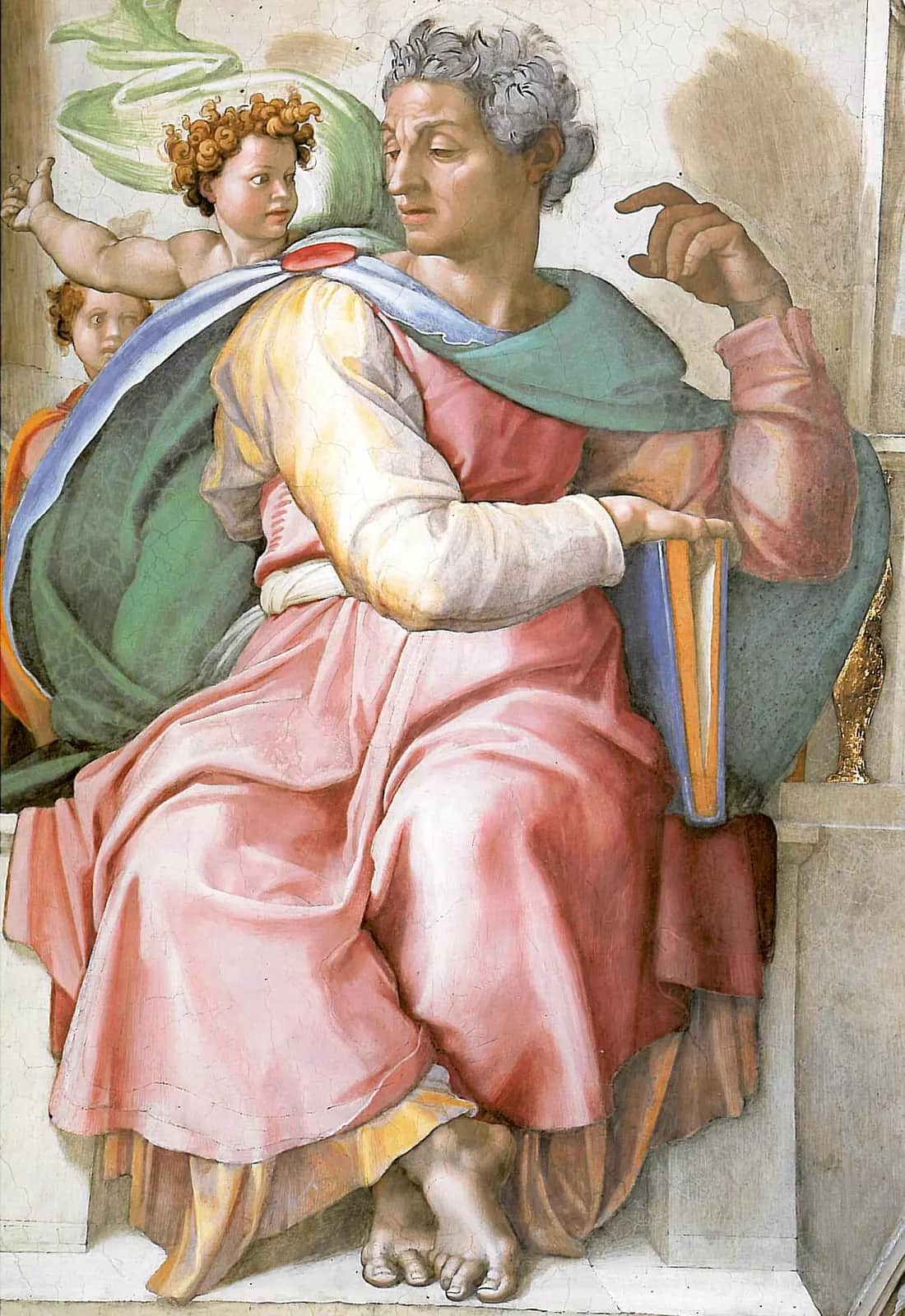
Isaiah 7:13 (WEB)
He said, “Listen now, house of David. Is it not enough for you to try the patience of men, that you will try the patience of my God also?
Fathers and councils · 11
Origen
“Behold, a virgin shall conceive, and bear a son, and shall call His name Immanuel, which is, being interpreted, God with us.”” — editor's note: Cf. Isa. vii. 10–14 with Matt. i. 23.
Read the whole comment
Irenaeus of Lyons
“He therefore, the Son of God, our Lord, being the Word of the Father, and the Son of man, since He had a generation as to His human nature from Mary—who was descended from mankind, and who was herself a human being—was made the Son of man.” — editor's note: Isa. vii. 13.
Read the whole comment“Butter and honey shall He eat: before He knows or chooses out things that are evil, He shall exchange them for what is good; for before the child knows good or evil, He shall not consent to evil, that He may choose that which is good.”” — editor's note: Isa. vii. 10–17.
Read the whole comment
Tertullian
“Therefore God Himself will give you a sign; Behold, the virgin shall conceive, and bear a son, and ye shall call his name Emmanuel” (which is, interpreted, “God with us”): “butter and honey shall he eat;”: “since, ere the child learn to call father or mother, he shall receive the power of…” — editor's note: See Isa. vii. 13, 14.
Read the whole comment
Cyril of Jerusalem
“Isaiah vii. 10–14” — the author cites it
Read the whole comment
Justin Martyr
“But God shall bring on thee, and on thy people, and on the house of thy father, days which have not yet come upon thee since the day in which Ephraim took away from Judah the king of Assyria.’” — editor's note: Isa. vii. 10–17 with Isa. viii. 4 inserted. The last clause may also be translated, “in which He took away from Judah Ephraim, even the king of Assyria.”
Read the whole comment“…thy people, and on the house of thy father, days which have not yet come upon thee since the day in which Ephraim took away from Judah the king of Assyria.’ ” And I continued: “Now it is evident to all, that in the race of Abraham according to the flesh no one has been born of a virgin, or is said to have been born…” — editor's note: Isa. vii. 10–17, with Isa. viii. 4 inserted between vers. 16 and 17.
Read the whole comment
Theodoret of Cyrus
““And when he says ‘Hear ye now, Oh House of David’ he means that the everlasting King whom God promised to David that he would raise up from his body is He who was born of David’s Virgin.”” — editor's note: Is. vii. 13
Read the whole comment
Cyprian of Carthage
“This is the contest which the prophet Isaiah of old predicted, saying, “It shall be no light contest for you with men, since God appoints the struggle.”” — editor's note: Isa. vii. 13; vide Lam. iii. 26.
Read the whole comment“Butter and honey shall He eat; before that He knows to prefer the evil, He shall exchange the good.”” — editor's note: Isa. vii. 10–15. The ordinary reading here is, “before He knows, to refuse the evil and to choose the good.” The reading in the text, however, is more…
Read the whole comment
Catena Aurea on Matthew
- Petrus AlfonsiCatena Aurea on Matthew
“But though the Prophet was speaking to Ahaz, the prophecy was yet not spoken to him only or of his time only; for it is introduced, “Hear, O house of David;” [Isa 7:13] not, ‘Hear, O Ahaz.’” — the author cites it
Read the whole comment
Cross-references · 18
Cited together in Dialogue with Trypho Chapter 43 and 1 other place.
Cited together in Dialogue with Trypho Chapter 43.
Cited together in Epistles Letter 8.
Cited together in Petrus Alfonsi on Matthew 1:22–23 (Catena Aurea).
Cited together in Petrus Alfonsi on Matthew 1:22–23 (Catena Aurea) and 1 other place.
Cited together in Epistles Letter 8.
Cited together in Epistles Letter 8.
Cited together in Epistles Letter 8.
Cited together in Epistles Letter 8.
Cited together in Epistles Letter 8.
Cited together in Epistles Letter 8.
Cited together in Epistles Letter 8.
Cited together in Epistles Letter 8.
Cited together in Epistles Letter 8.
Cited together in Epistles Letter 8.
Cited together in Against Celsus I.34.
Cited together in Against Celsus I.34.
Cited together in Epistles Letter 8.