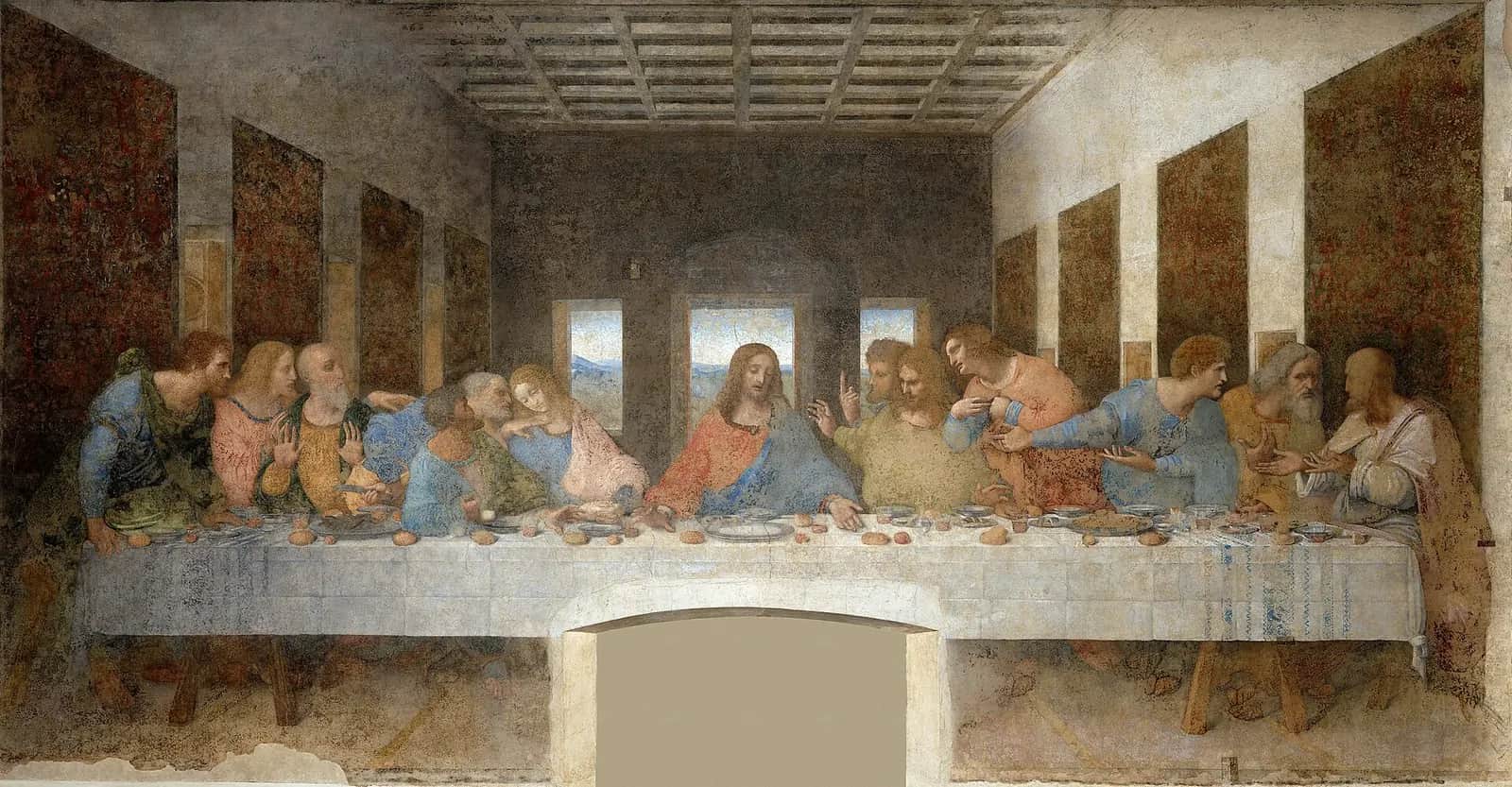
Matthew 26:24 (WEB)
The Son of Man goes even as it is written of him, but woe to that man through whom the Son of Man is betrayed! It would be better for that man if he had not been born.”
Catechism · 1
“Do this in remembrance of me." and likewise the cup after supper, saying, "This cup which is poured out for you is the New Covenant in my blood."” — Catechism footnote: Lk 22:7-20; Cf. Mt 26:17-29; Mk 14:12-25; 1 Cor 11:23-26.
Fathers and councils · 35
Irenaeus of Lyons
“Besides, the Lord also declared regarding him, “Woe to the man by whom the Son of man shall be betrayed;” and, “It were better for him if he had never been born;” and he was called the “son of perdition” by Him.” — editor's note: Matt. xxvi. 24.
Read the whole comment“…and all those things which shall come upon such as have heard His words, but done them not, and that it were better for them if they had not been born, and that it shall be more tolerable for Sodom and Gomorrah in the judgment than for that city which did not receive the word of His disciples.” — editor's note: Matt. xxvi. 24.
Read the whole comment
John Damascene
“…was possible to save him, remains of his own set purpose blind and uncured, or rather incurable, and then he is handed over to utter destruction, as was Judas.” — editor's note: St. Matt. xxvi. 24.
Read the whole comment
John Cassian
- John Cassian, Conferences I–X VI.3Conference VI
“For in the case of the one his life was so profitable to himself that we are told that his birth brought joy to others also, as we read “And many shall rejoice at his birth;” but of the life of the other it is said: “It were good for that man if he had never been born.”” — editor's note: S. Matt. xxvi. 24.
Read the whole comment - John Cassian, Conferences XI–XVII XVII.12Conference XVII
“And yet it was not only of no advantage, but was actually to the disadvantage of the traitor by whose means it is shown to have been brought about, so that it is absolutely said of him: “It were good for that man if he had never been born.”” — editor's note: S. Matt. xxvi. 24.
Read the whole comment
Augustine of Hippo
“He said unto him, Thou hast said.”” — editor's note: Matt. xxvi. 20–25.
Read the whole comment“Matthew also goes on to make the following addition to the preceding: “The Son of man indeed goeth, as it is written of Him; but woe unto that man by whom the Son of man shall be betrayed! it had been good for that man if he had not been born.”” — editor's note: Matt. xxvi. 22–25.
Read the whole comment
John Chrysostom
“It had been good for that man if he had not been born.”” — editor's note: Matt. xxvi. 23, 24. [R.V., “good were it,” etc.]
Read the whole comment
Gregory of Nyssa
“We learn as much too in the case of Judas, from the sentence pronounced upon him in the Gospels; namely, that when we think of such men, that which never existed is to be preferred to that which has existed in such sin.” — editor's note: S. Matt. xxvi. 24.
Read the whole comment
Clement of Alexandria
“…omnium, qui ea, quæ sunt iniqua, efficiunt.”—“Væ homini illi,” inquit Dominus; “bonum esset el, si non natus esset, quam ut unum ex electis meis scandalizaret.” — editor's note: Matt. xxvi. 24.
Read the whole comment
Catena Aurea on Matthew
- JeromeCatena Aurea on Matthew
The Lord had above foretold His Passion, He now foretels who is to be the traitor; thus giving him place of repentance, when he should see that his thoughts and the secret designs of his heart were known.
Read the whole comment - Remigius of AuxerreCatena Aurea on Matthew
“With the twelve,” it is said, for Judas was personally among them, though he had ceased to be so in merit.
Read the whole comment - JeromeCatena Aurea on Matthew
Judas acts in every thing to remove all suspicion of his treachery.
Read the whole comment - Remigius of AuxerreCatena Aurea on Matthew
And it is beautifully said, “When even was come,” because it was in the evening that the Lamb was wont to be slain.
Read the whole comment - Rabanus MaurusCatena Aurea on Matthew
For this reason also, because in Christ’s Passion, wherein the true sun hasted to his setting, eternal refreshment was made ready for all believers.
Read the whole comment - John ChrysostomCatena Aurea on Matthew
The Evangelist relates how as they sat at meat, Jesus declares Judas’ treachery, that the wickedness of the betrayer may be more apparent from the season and the circumstances.
Read the whole comment - Leo the GreatCatena Aurea on Matthew
He shews that the conscience of His betrayer was known to Him, not meeting his wickedness with a harsh and open rebuke, that penitence might find a readier way to one who had not been disgraced by public dismissal.
Read the whole comment - OrigenCatena Aurea on Matthew
Or, He spoke generally, to prove the nature of each of their hearts, and to evince the wickedness of Judas, who would not believe in One who knew his heart. I suppose that at first he supposed that the thing was hid…
Read the whole comment - JeromeCatena Aurea on Matthew
O wonderful endurance of the Lord, He had said before, “One of you shall betray me.” The traitor perseveres in his wickedness; He designates him more particularly, yet not by name. For Judas, while the rest were…
Read the whole comment - John ChrysostomCatena Aurea on Matthew
I rather think that Christ did this out of regard for him, and to bring him to a better mind.
Read the whole comment - Rabanus MaurusCatena Aurea on Matthew
What Matthew calls ‘paropsis,’ Mark calls ‘catinus.’ The ‘paropsis’ is a square dish for meat, ‘catinus,’ an earthen vessel for containing fluids; this then might be a square earthen vessel.
Read the whole comment - OrigenCatena Aurea on Matthew
Such is the wont of men of exceeding wickedness, to plot against those of whose bread and salt they have partaken, and especially those who have no enmity against them. But if we take it of the spiritual table, and…
Read the whole comment - JeromeCatena Aurea on Matthew
Judas, not withheld by either the first or second warning, perseveres in his treachery; the Lord’s long-suffering nourishes his audacity. Now then his punishment is foretold, that denunciations of wrath may correct…
Read the whole comment - Remigius of AuxerreCatena Aurea on Matthew
It belongs to human nature to come and go, Divine nature remains ever the same. So because His human nature could suffer and die, therefore of the Son of Man it is well said that “he goeth.” He says plainly, “As it…
Read the whole comment - John ChrysostomCatena Aurea on Matthew
This He said to comfort His disciples, that they might not think that it was through weakness that He suffered; and at the same time for the correction of His betrayer. And notwithstanding His Passion had been…
Read the whole comment - OrigenCatena Aurea on Matthew
He said not, By whom “the Son of Man is betrayed,” but “through whom,” [John 13:2] pointing out another, to wit the Devil, as the author of His betrayal, Judas as the minister. But woe also to all betrayers of…
Read the whole comment - Remigius of AuxerreCatena Aurea on Matthew
Woe also to all who draw near to Christ’s table with an evil and defiled conscience! who though they do not deliver Christ to the Jews to be crucified, deliver Him to their own sinful members to be taken. He adds, to…
Read the whole comment - JeromeCatena Aurea on Matthew
We are not to infer from this that man has a being before birth; for it cannot be well with any man till he has a being; it simply implies that it is better not to be, than to be in evil.
Read the whole comment - Augustine of HippoCatena Aurea on Matthew
And if it be contended that there is a life before this life, that will prove that not only not for Judas, but for none other is it good to have been born. Can it mean, that it were better for him not to have been…
Read the whole comment - OrigenCatena Aurea on Matthew
After all the Apostles had asked, and after Christ had spoken of him, Judas at length enquired of himself, with the crafty design of concealing his treacherous purpose by asking the same question as the rest; for…
Read the whole comment - JeromeCatena Aurea on Matthew
His question feigns either great respect, or a hypocritical incredulousness. The rest who were not to betray Him, said only “Lord;” the actual traitor addresses Him as “Master,” as though it were some excuse that he…
Read the whole comment - OrigenCatena Aurea on Matthew
Or, out of sycophancy he calls Him Master, while be holds Him unworthy of the title.
Read the whole comment - John ChrysostomCatena Aurea on Matthew
Though the Lord could have said, Hast thou covenanted to receive silver, and darest to ask Me this? But Jesus, most merciful, said nothing of all this, therein laying down for us rules and landmarks of endurance of…
Read the whole comment - Remigius of AuxerreCatena Aurea on Matthew
Which may be understood thus; Thou sayest it, and thou sayest what is true; or, Thou hast said this, not I; leaving him room for repentance so long as his villainy was not publicly exposed.
Read the whole comment - Rabanus MaurusCatena Aurea on Matthew
This might have been so said by Judas, and answered by the Lord as not to be overheard by the rest.
Read the whole comment
Cross-references · 26
Parallel passages
Matthew 26:24 and Mark 14:21 share the same wording (30 words).
Cited together with
Cited together in Against Heresies II.20.
Cited together in Against Heresies II.20.
Cited together in Against Heresies II.20.
Cited together in Conferences I–X VI.3.
Cited together in Against Heresies II.20.
Cited together in An Exact Exposition of the Orthodox Faith II.29.
Cited together in Against Heresies II.20.
Cited together in Against Heresies II.20.
Cited together in An Exact Exposition of the Orthodox Faith II.29.
Cited together in Against Heresies IV.28.
Cited together in An Exact Exposition of the Orthodox Faith II.29.
Cited together in Against Heresies IV.28.
Cited together in Against Heresies IV.28.
Cited together in Against Heresies II.20.
Cited together in Against Heresies IV.28.
Cited together in Against Heresies IV.28.
Cited together in An Exact Exposition of the Orthodox Faith II.29.
Cited together in Against Heresies IV.28.
Cited together in Origen on Matthew 26:20–25 (Catena Aurea).
Cited together in Against Heresies II.20.
Cited together in Against Heresies II.20.
Cited together in Against Heresies IV.28.
Cited together in An Exact Exposition of the Orthodox Faith II.29.
Cited together in Against Heresies IV.28.
Cited together in Against Heresies IV.28.