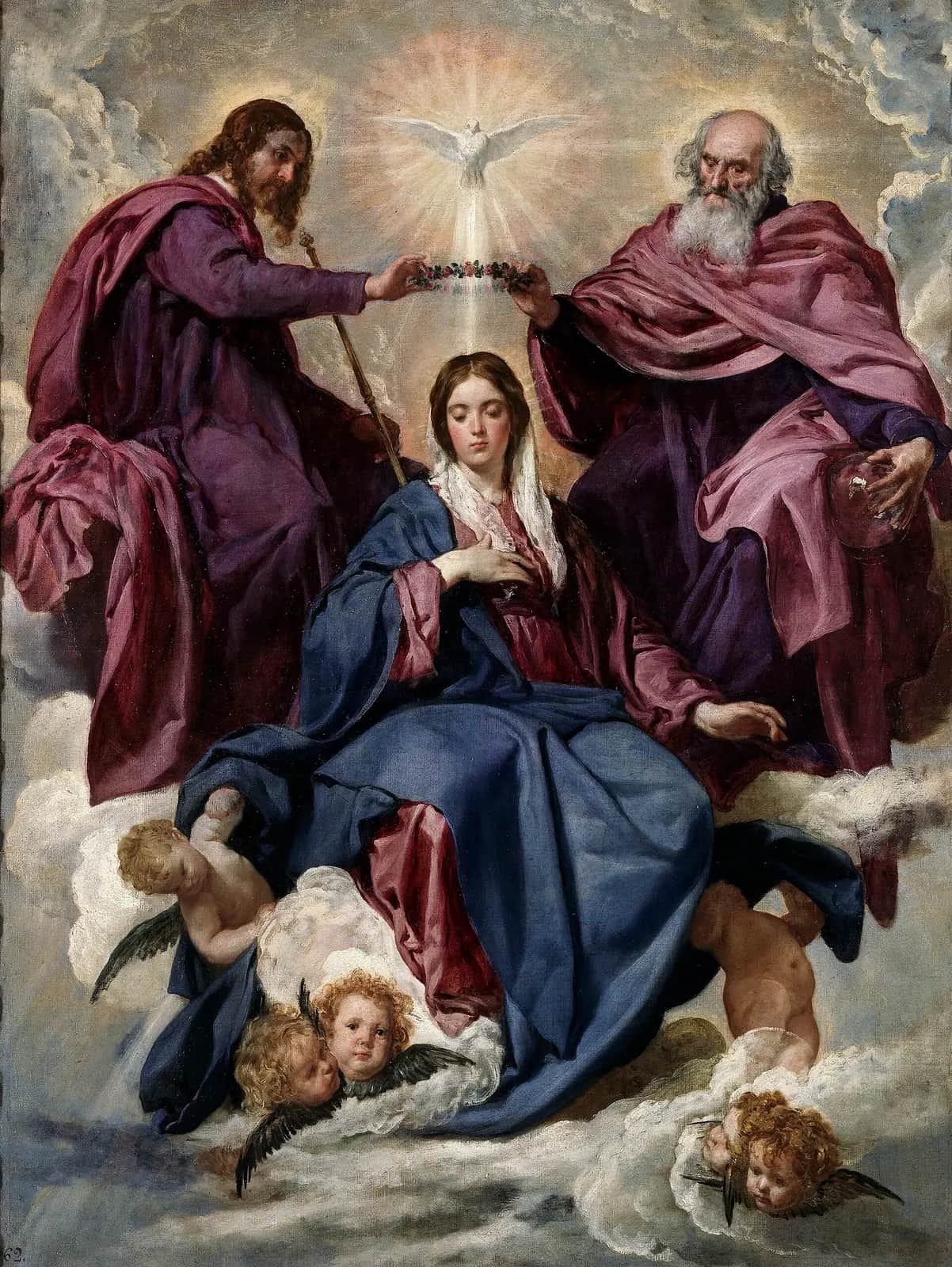
Psalm 45:2 (WEB)
You are the most excellent of the sons of men. Grace has anointed your lips, therefore God has blessed you forever.
Fathers and councils · 28
Origen
“Thine arrows are pointed, O mighty One; the people will fall under Thee in the heart of the enemies of the King.”” — editor's note: Ps. xlv. 2–5.
Read the whole comment- Origen, De Principiis IV.1Book IV
“What are we to say, moreover, regarding those prophecies of Christ contained in the Psalms, especially the one with the superscription, “A song for the Beloved;” in which it is stated that “His tongue is the pen of a ready writer; fairer than the children of men;” that “grace is poured into His lips?”” — editor's note: Ps. xlv. 1, 2.
Read the whole comment - Origen, De Principiis IV.2Book IV
“And what are we to say regarding the prophecies of Christ in the Psalms, there being a certain ode with the superscription “For the Beloved,” whose” tongue” is said to be the “pen of a ready writer, who is fairer than the sons of men,” since “grace was poured on His lips?”” — editor's note: Ps. xlv. 1, 2.
Read the whole comment
Irenaeus of Lyons
“There are also some [of them] who declare, “Thou art fairer than the children of men;” and, “God, Thy God, hath anointed Thee with the oil of gladness above Thy fellows;” and, “Gird Thy sword upon Thy thigh, O Most Mighty, with Thy beauty and Thy…” — editor's note: Ps. xlv. 2.
Read the whole comment
Tertullian
““Blooming in beauty above the sons of men; grace is outpoured in thy lips.”” — editor's note: See Ps. xlv. 2 (xliv. 3 in LXX.).
Read the whole comment“Gird Thy sword upon Thy thigh, O most mighty, with Thy glory and Thy majesty.”” — editor's note: Ps. xlv. 2, 3.
Read the whole comment““Thou art fairer than the children of men; grace is poured forth upon Thy lips.”” — editor's note: Ps. xlv. 2.
Read the whole comment“For although, in David’s words, He is fairer than the children of men,” yet it is in that figurative state of spiritual grace, when He is girded with the sword of the Spirit, which is verily His form, and beauty, and glory.” — editor's note: Ps. xlv. 2.
Read the whole comment
Eusebius of Caesarea
“For he is truly great, and great is his house, lofty and spacious and ‘comely in beauty above the sons of men.’” — editor's note: Psa. xlv. 2.
Read the whole comment
Ambrose of Milan
“First of all, in that which those who purpose to marry desire above all things, that they may boast of the beauty of their husband, they must of necessity confess that they are inferior to virgins, to Whom alone it is suitable to say: “Thou art fairer than the children of men, grace is poured on Thy lips.”” — editor's note: Ps. xlv. [xliv.] 2.
Read the whole comment
Augustine of Hippo
“Those pears that we stole were fair to the sight, because they were Thy creation, Thou fairest of all, Creator of all, Thou good God—God, the highest good, and my true good.” — editor's note: Ps. xlv. 2.
Read the whole comment““Because of the words of Thy lips.”” — editor's note: See on Ps. xlv. 2: “the word of grace, the kiss of grace.”
Read the whole comment“Lo! now then that Word, so uttered, Eternal, the Co-eternal Offspring of the Eternal, will come as “the Bridegroom;” “Fairer than the children of men” (ver. 2).” — the author cites it
Read the whole comment“But that, “Out of Sion is the semblance of His beauty,” that thence beginneth the beauty of His Gospel, that thence He began to be preached, being “beautiful in form beyond the sons of men,” agreeth with the words of the Lord, who saith, “Beginning at Jerusalem.”” — editor's note: Ps. xlv. 2.
Read the whole comment“Was it that Thou wast hiding Thy beauty, O Thou beautiful in form before the sons of men?” — editor's note: Ps. xlv. 2.
Read the whole comment“If then the human father and the human husband desire at once to be feared and loved; much more doth our Father who is in heaven, and that Bridegroom, “beautiful beyond the sons of men,” not in the flesh, but in goodness.” — editor's note: Ps. xlv. 2.
Read the whole comment““Thou art beauteous in loveliness surpassing the sons of men; grace is poured upon thy lips.”” — editor's note: Ps. xlv. 2.
Read the whole comment“…orders herself for one, taking thought of the things of the world, “how to please her husband;” but hath so loved “Him of fair beauty above the sons of men,” as that, because she could not, even as Mary, conceive Him in her flesh, she hath kept her flesh also virgin for Him conceived in her heart.” — editor's note: Ps. xlv. 2
Read the whole comment“…King of Heaven, unto Him, by Whom men were created, and Who was created among men for the sake of men; unto Him, Who is fair of beauty above the sons of men, and despised by the sons of men on behalf of the sons of men: unto Him, Who, ruling the immortal angels, disdained not to do service unto mortals.” — editor's note: Ps. xlv. 2
Read the whole comment“Therefore do ye with all earnest purpose please Him, Who is “’fair of form above the sons of men.”” — editor's note: Ps. xlv. 2
Read the whole comment“Comely in form above the sons of men, grace is poured abroad in Thy Lips.”” — editor's note: Ps. xlv. 2.
Read the whole comment“Myrrh and drops, and cassia from Thy vestments, from the houses of ivory: out of which the daughters of kings have delighted Thee in Thine honor.”” — editor's note: Ps. xlv. 1–9.
Read the whole comment“And here occurred the words of the Church in the Song of Songs, when she saith, “I have washed my feet; how shall I defile them?” when she wished to go and open to that Being, fairer in form than the sons of men, who had come to her and knocked, and asked her to open to Him.” — editor's note: Ps. xlv. 2.
Read the whole comment
John Chrysostom
“For not by any means in working wonders only was He wonderful, but even when merely showing Himself, He was full of great grace; and to declare this the prophet said, “Fairin beauty beyond the children of men.”” — editor's note: Ps. xlv. 2, LXX.
Read the whole comment
Gregory of Nazianzus
“He had no form nor comeliness in the eyes of the Jews—but to David He is fairer than the children of men.” — editor's note: Ps. xlv. 2.
Read the whole comment
Catena Aurea on Matthew
- Remigius of AuxerreCatena Aurea on Matthew
“For if Moses’ countenance was made glorious, and Stephen’s as that of an Angel, gather from this how it was to have been supposed that their common Lord must have then appeared; of whom the Prophet speaks, “Thy form is fair above the sons of men.” [Ps 45:2]” — the author cites it
Read the whole comment
Clement of Alexandria
“And that the Lord Himself was uncomely in aspect, the Spirit testifies by Esaias: “And we saw Him, and He had no form nor comeliness but His form was mean, inferior to men.”” — editor's note: Isa. liii. 2, 3. [But see also Ps. xlv. 2, which was often cited by the ancients to prove the reverse. Both may be reconciled; he was a fair and comely child…
Read the whole comment
Cyprian of Carthage
“To Thy honour and to Thy beauty both attend, and direct Thyself, and reign, because of truth, and meekness, and righteousness.”” — editor's note: Ps. xlv. 1–4.
Read the whole comment
Cross-references · 32
Cited together in On the Good of Widowhood Chapter 23.
Cited together in Confessions II.6.
Cited together in Concerning Virgins I.7.
Cited together in Confessions II.6.
Cited together in Confessions II.6.
Cited together in Concerning Virgins I.7.
Cited together in Concerning Virgins I.7.
Cited together in Concerning Virgins I.7.
Cited together in Concerning Virgins I.7.
Cited together in Concerning Virgins I.7.
Cited together in The Five Books Against Marcion III.16.
Cited together in The Five Books Against Marcion III.16.
Cited together in The Five Books Against Marcion III.16 and 2 other places.
Cited together in The Five Books Against Marcion III.16 and 1 other place.
Cited together in Remigius of Auxerre on Matthew 8:18–22 (Catena Aurea).
Cited together in Remigius of Auxerre on Matthew 8:18–22 (Catena Aurea).
Cited together in Remigius of Auxerre on Matthew 8:18–22 (Catena Aurea).
Cited together in Of Holy Virginity Chapter 38.
Cited together in Of Holy Virginity Chapter 38.
Cited together in Of Holy Virginity Chapter 38.
Cited together in The Instructor III.1.
Cited together in Concerning Virgins I.7.
Cited together in Of Holy Virginity Chapter 38.
Cited together in Of Holy Virginity Chapter 11 and 1 other place.
Cited together in The Instructor III.1 and 1 other place.
Cited together in Of Holy Virginity Chapter 11.
Cited together in The Five Books Against Marcion III.13.
Cited together in The Five Books Against Marcion III.13.
Cited together in Concerning Virgins I.7.
Cited together in The Instructor III.1.
Cited together in Confessions II.6.
Cited together in The Five Books Against Marcion III.16.