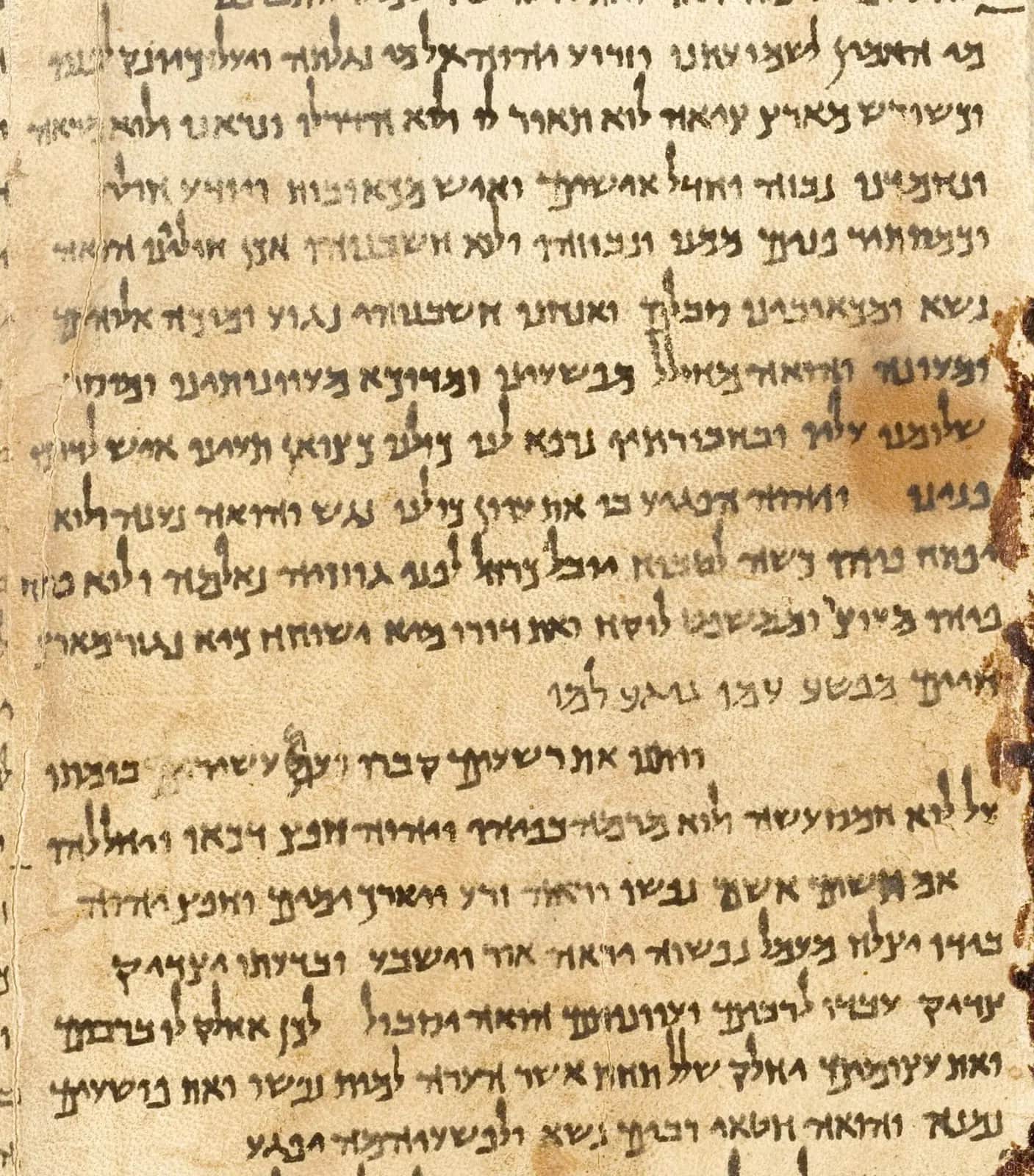
Isaiah 53:2 (WEB)
For he grew up before him as a tender plant, and as a root out of dry ground. He has no good looks or majesty. When we see him, there is no beauty that we should desire him.
Catechism · 1
The Messiah's characteristics are revealed above all in the "Servant songs." These songs proclaim the meaning of Jesus' Passion and show how he will pour out the Holy Spirit to give life to the many: not as an outsider, but by embracing our "form as slave."
Fathers and councils · 28
Origen
“And who shall describe His generation? because His life is taken away from the earth; because of the iniquities of My people was He led unto death.”” — editor's note: Cf. Isa. liii. 1–8 in the Septuagint version (Roman text).
Read the whole comment- Origen, Against Celsus VI.75Book VI
“He has no form nor glory, and we beheld Him, and He had no form nor beauty; but His form was without honour, and inferior to that of the sons of men.”” — editor's note: Cf. Isa. liii. 1–3 (LXX.). [See Bishop Pearson’s Exposition of the Creed, Art. II., note. S.]
Read the whole comment - Origen, Against Celsus VII.16Book VII
“For the prophecies do not foretell that God will be crucified, when they say of Him who should suffer, “We beheld Him, and He had no form or comeliness; but His form was dishonoured and marred more than the sons of men; He was a man of sorrows, and acquainted with grief.”” — editor's note: Isa. liii. 2, 3.
Read the whole comment
Irenaeus of Lyons
“Then, at last, He came on to death itself, that He might be “the first-born from the dead, that in all things He might have the pre-eminence,” the Prince of life, existing before all, and going before all.” — editor's note: [That our Lord was prematurely old may be inferred from the text which Irenæus regards as proof that he literally lived to be old. St. John viii. 56, 57; comp.…
Read the whole comment“…which is from the Virgin, the divine Scriptures do in both respects testify of Him: also, that He was a man without comeliness, and liable to suffering; that He sat upon the foal of an ass; that He received for drink, vinegar and gall; that He was despised among the people, and humbled Himself even to death and…” — editor's note: Isa. liii. 2.
Read the whole comment
Tertullian
“We brought a report concerning Him, as if He were a little child, as if He were a root in a dry ground, who had no form nor comeliness.”” — editor's note: Isa. liii. 1, 2.
Read the whole comment“And we saw Him, and He had not attractiveness or grace; but His mien was unhonoured, deficient in comparison of the sons of men,” “a man set in the plague, and knowing how to bear infirmity:” to wit as having been set by the Father “for a stone of offence,” and “made a little lower” by…” — editor's note: See Isa. liii. 2 in LXX.
Read the whole comment“…“Behold, they who are clad in soft raiment are in kings’ houses:” in short, inglorious in countenance and aspect, just as Isaiah withal had fore-announced.” — editor's note: Isa. liii. 2.
Read the whole comment“His body did not reach even to human beauty, to say nothing of heavenly glory.” — editor's note: Compare Isa. liii. 2. See also our Anti-Marcion, p. 153, Edin.
Read the whole comment“…a tender plant, like a root out of a thirsty ground; He hath no form nor comeliness; and we beheld Him, and He was without beauty: His form was disfigured;” “marred more than the sons of men; a man stricken with sorrows, and knowing how to bear our infirmity;” “placed by the Father as a stone of stumbling and a…” — editor's note: Isa. liii. 2, 3, according to the Septuagint.
Read the whole comment“Isaiah comes to our help again: “We have announced (His way) before Him,” says he; “He is like a servant, like a root in a dry ground; He hath no form nor comeliness; we saw Him, and He had neither form nor beauty; but His form was despised, marred above all men.”” — editor's note: Sentences out of Isa. lii. 14 and liii. 2, etc.
Read the whole comment
Justin Martyr
“We have preached before Him as if [He were] a child, as if a root in a dry ground.’” — editor's note: Isa. liii. 1, 2.
Read the whole comment
Theodoret of Cyrus
“His form was dishonoured and rejected among the sons of men,’ thus distinctly showing that the marks of indignity and the sufferings must be applied to the human but not to the divine.” — editor's note: Isaiah liii. 2, 3. Sept.
Read the whole comment
Ambrose of Milan
“For we saw Him having neither form nor comeliness; if then it be not He, who is that King of glory?”” — editor's note: Isa. liii. 2.
Read the whole comment
Augustine of Hippo
“Was it that Thou didst not seem to have beauty nor grace?” — editor's note: Isa. liii. 2.
Read the whole comment“For in very deed observe ye the seed of the mustard, minute, dull coloured, altogether despicable, in order that therein may be fulfilled that which hath been said, We have seen Him, and He had neither form nor comeliness.” — editor's note: Isa. liii. 2.
Read the whole comment“That He might build up Sion, that He might be a foundation in Sion, He was seen by Sion, but not in His glory: “we have seen Him, and He had no form nor comeliness.”” — editor's note: Isa. liii. 2.
Read the whole commentThe Fulfilment of the Prophecies Concerning Christ. 47. Wherefore let those evil applauders of Christ, who refuse to become Christians, desist from making the allegation that Christ did not teach that their gods were…
Read the whole comment“There now are two flutes which seem to make discordant sounds: howbeit one Spirit breathes into both.” — editor's note: Is. liii. 2.
Read the whole comment“For This One, fair of form above the sons of men, men saw on the Cross of the Passion; “and He had not form or beauty, but His face cast down, and His posture unseemly.”” — editor's note: Is. liii. 2. [See R.V.]
Read the whole comment
John Chrysostom
“And if Esaias saith, “He hath no form nor comeliness,”he affirms it either in comparison of the glory of His Godhead, which surpasses all utterance and description; or as declaring what took place at His passion,…” — editor's note: Isa. liii. 2, LXX. [So the Hebrew.]
Read the whole comment
Basil the Great
“For “Thou hast made him a little lower than the angels,” and again “Who was made a little lower than the angels,” and “we saw Him and He had neither form nor comeliness, his form was deficient beyond all men.”” — editor's note: Isa. liii. 2, 3, LXX.
Read the whole comment
Ephrem the Syrian
“He came up as a root before Him, as a root of parched ground.” — editor's note: Is. liii. 2.
Read the whole comment
Gregory of Nazianzus
“He had no form nor comeliness in the eyes of the Jews—but to David He is fairer than the children of men.” — editor's note: Isa. liii. 2.
Read the whole comment
Aphrahat
“And he said in that passage:—He came up as a little child before Him, and as a root from the dry ground.” — editor's note: Is. liii. 2.
Read the whole comment
Clement of Alexandria
“And that the Lord Himself was uncomely in aspect, the Spirit testifies by Esaias: “And we saw Him, and He had no form nor comeliness but His form was mean, inferior to men.”” — editor's note: Isa. liii. 2, 3. [But see also Ps. xlv. 2, which was often cited by the ancients to prove the reverse. Both may be reconciled; he was a fair and comely child…
Read the whole comment
Cyprian of Carthage
“And God has delivered Him for our sins; and He, because He was afflicted, opened not His mouth.”” — editor's note: Isa. liii. 1–7. [See p. 516, supra.]
Read the whole comment
Hippolytus of Rome
“…(lit. = deficient) above all men; a man smitten and familiar with bearing infirmity, (for His face was turned away); He was despised, and esteemed not.”” — editor's note: Isa. liii. 2–5.
Read the whole comment
Cross-references · 22
Cited together in Exposition of the Christian Faith IV.1.
Cited together in Exposition of the Christian Faith IV.1.
Cited together in Exposition of the Christian Faith IV.1.
Cited together in Exposition of the Christian Faith IV.1.
Cited together in Exposition of the Christian Faith IV.1.
Cited together in Exposition of the Christian Faith IV.1.
Cited together in On the Flesh of Christ Chapter 9.
Cited together in On the Flesh of Christ Chapter 9.
Cited together in The Instructor III.1.
Cited together in Exposition of the Christian Faith IV.1.
Cited together in Dialogue with Trypho Chapter 42.
Cited together in The Instructor III.1.
Cited together in Dialogue with Trypho Chapter 42.
Cited together in The Five Books Against Marcion III.16.
Cited together in The Five Books Against Marcion III.16 and 2 other places.
Cited together in Against Celsus VI.75.
Cited together in On the Good of Widowhood Chapter 23.
Cited together in Exposition of the Christian Faith IV.1.
Cited together in The Five Books Against Marcion III.16.
Cited together in Against Celsus I.54.
Cited together in Against Celsus I.54 and 1 other place.
Cited together in Against Celsus I.54.