The idea
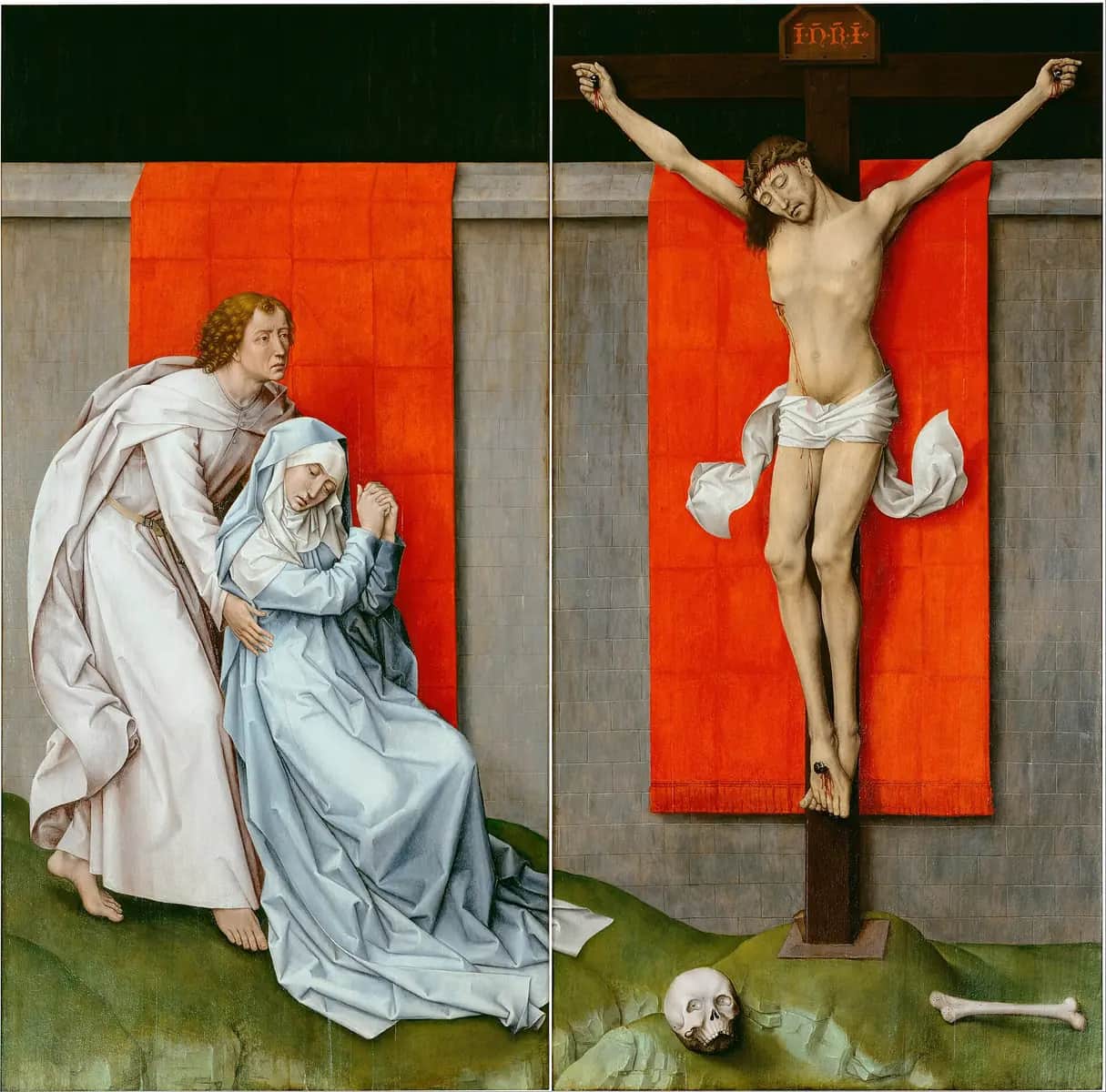
Jesus' words form a new family: 'in ancient Judaism, adoptive relationships were real; they were legally binding,' as Joseph's adoptive fatherhood of Jesus shows and as the Mishnah's rule on declared wills confirms. 'Jesus is not just expressing a fleeting wish… He is making a formal declaration of his will.' And John does not say the disciple took Mary to his 'house' (oikos) but 'to his own' (eis ta idia), 'a broader term that means one's own,' as in one's own family, people or possessions — the same phrase as 'he came unto his own' (John 1:11) and the disciples' 'we have left our own' (Luke 18:28–29). Brown renders it 'the disciple took her into his care.'
Key verses
- John 19:27 — 'took her unto his own.'
- John 1:11 — 'he came unto his own (eis ta idia).'
- Luke 18:28 — 'we have left our own' (ta idia).
- Matthew 1:25 — Joseph's adoptive fatherhood — 'he called his name Jesus.'
The connection
| Old Testament root | New Testament fulfilment | |
|---|---|---|
| Binding adoption in Jewish law | → | Mary made the disciple's mother by Jesus' declared will |
The vault's older note asserted that adoption was binding; this is the evidence — a Mishnaic rule, Joseph's own fatherhood, and two parallel uses of the phrase that fix what 'to his own' means.
Sources
- Mishnah — Baba Bathra 8:6 (p 162) · read
- Modern scholars Pitre cites — Alan Culpepper; Raymond Brown; Davies and Allison (p 162)