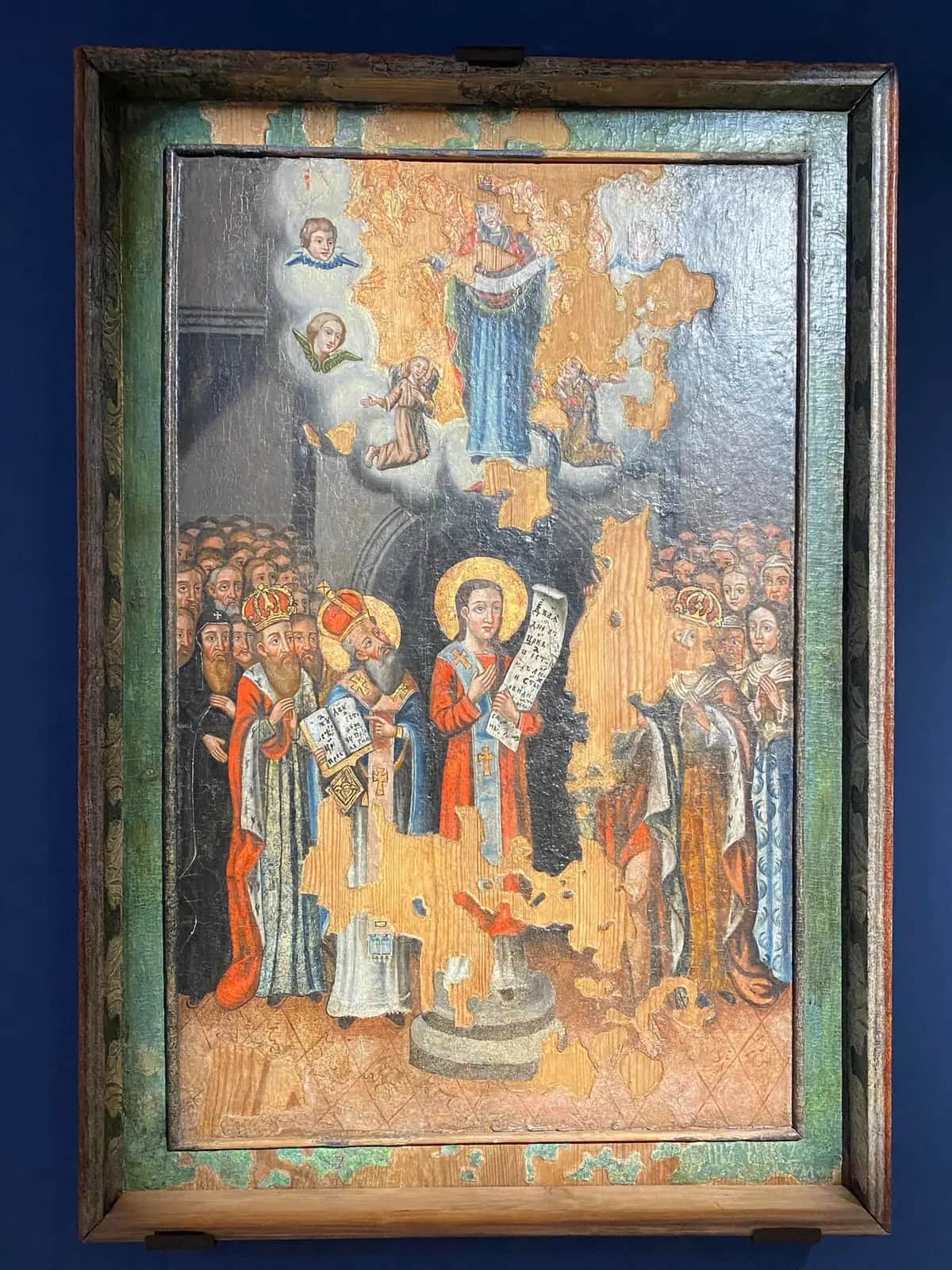
The idea
If Mary was assumed bodily into the heavenly temple, then 'she is most certainly not dead… she is much more alive than any human on earth.' The earliest Christian prayer to her, on an Egyptian papyrus of the third or fourth century, asks exactly what Rachel's children asked: 'We take refuge in your mercy, Mother of God. Do not disregard our prayers in troubling times.' Vatican II teaches it: 'Taken up into heaven she did not lay aside this saving office but by her manifold intercession continues to bring us the gifts of eternal salvation.' And the Jewish scholar Jacob Neusner closes the chapter: 'That is why I can find in Mary a Christian, a Catholic Rachel, whose prayers count when the prayers of great men, fathers of the world, fall to the ground… So, yes, if Rachel, then why not Mary?'
Key verses
- Jeremiah 31:16 — Rachel's intercession answered.
- James 5:16 — 'pray one for another.'
- Revelation 12:1 — the Woman alive in heaven.
- 1 Kings 2:19 — the queen mother who brings petitions to the king.
The connection
| Old Testament root | New Testament fulfilment | |
|---|---|---|
| Rachel, whose prayer for her children God cannot refuse | → | Mary, the Catholic Rachel, interceding from heaven |
The three threads of the book meet here: the queen mother's intercession, Rachel's prayer, and the Ark taken into heaven. A mother who is alive, exalted and heard is a mother one can ask.
Sources
- Sub tuum praesidium (p 157) · read
- Lumen Gentium (Vatican II, 1964) — §62 (pp 158–159) · read
- Modern scholars Pitre cites — Jacob Neusner (p 159)