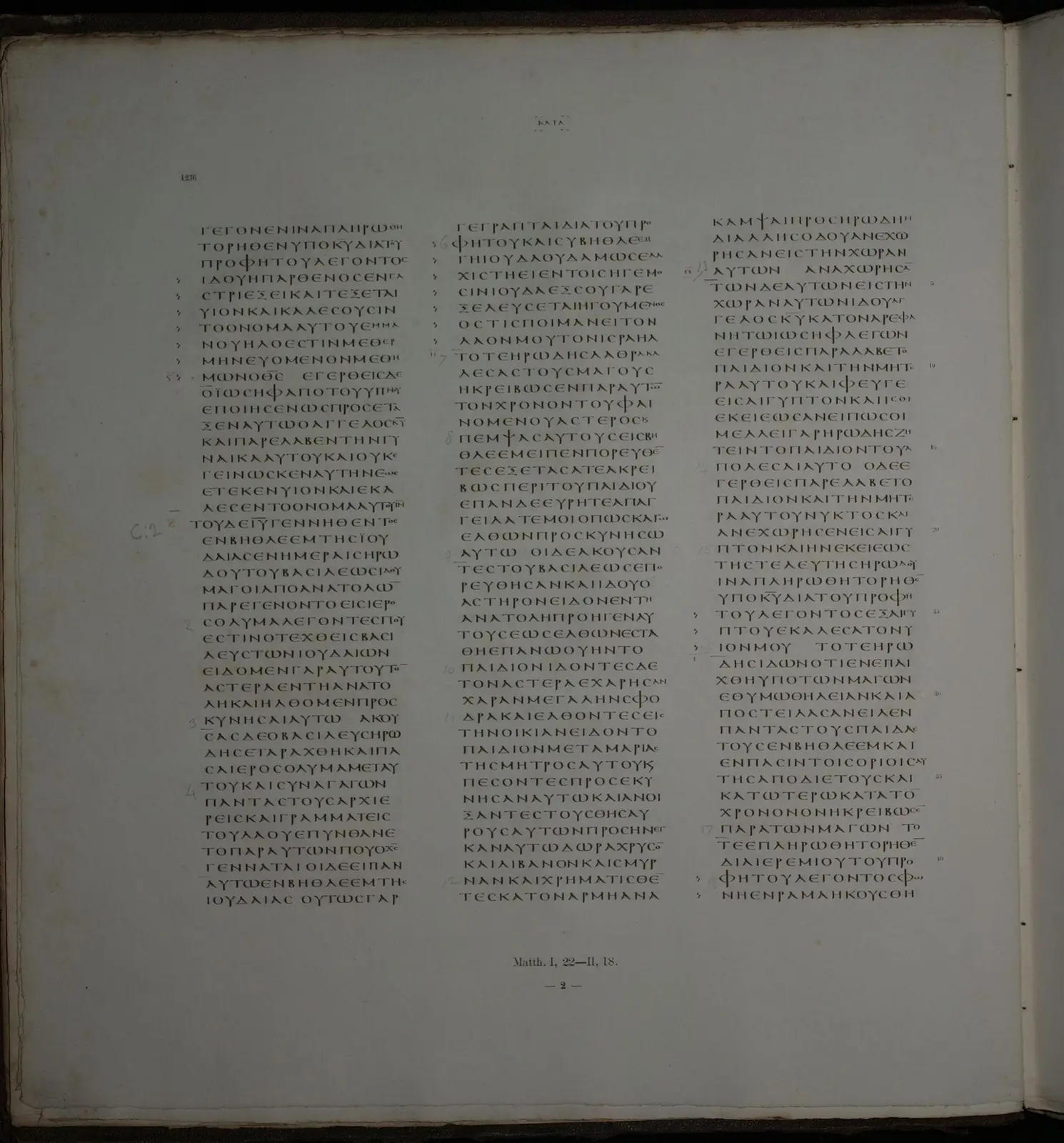
James 5:16 (WEB)
Confess your sins to one another and pray for one another, that you may be healed. The insistent prayer of a righteous person is powerfully effective.
As quoted in the map (KJV)
James 5:16 (KJV)
Confess your faults one to another, and pray one for another, that ye may be healed. The effectual fervent prayer of a righteous man availeth much.
Key words
- εὔχεσθε ὑπὲρ ἀλλήλωνeuchesthe hyper allēlōn · Greek
- 'pray one for another' — Christians are commanded to intercede for each other.
- δέησις δικαίου ἐνεργουμένηdeēsis dikaiou energoumenē · Greek
- 'the effectual fervent prayer of a righteous man' — the prayer of the righteous has power.
Why it matters
Scripture commands Christians to pray for one another and says the prayer of the righteous is powerful. Pitre asks why such prayers should cease in heaven (p 85; compare Revelation 5:8, where the saints' prayers rise before God). If Mary the queen is alive in heaven, asking her to pray for us is what James commands, carried to its conclusion — and the earliest recorded Christian prayers to her show the Church drew exactly that conclusion.
Catechism · 3
The Anointing of the Sick
“…up and save them. and indeed she exhorts them to contribute to the good of the People of God by freely uniting themselves to the Passion and death of Christ."” — Catechism footnote: LG 11; cf. Jas 5:14-16; Rom 8:17; Col 1:24; 2 Tim 2:11-12; 1 Pet 4:13.
In the Old Testament
“St. James refers to Elijah in order to encourage us to pray: "The prayer of the righteous is powerful and effective."” — Catechism footnote: Jas 5:16b-18.
The Battle of Prayer
“"You ask and do not receive, because you ask wrongly, to spend it on your passions."” — Catechism footnote: Jas 4:3; cf. the whole context: Jas 4:1-10; 1:5-8; 5:16.
Fathers and councils · 4
Gregory the Great
“But, being mindful of what is written, Pray for one another, that ye may be healed (James v. 16), I give also what I ask for.” — the author cites it
Read the whole comment
Tertullian
“…unto the Lord your God; to bow before the feet of the presbyters, and kneel to God’s dear ones; to enjoin on all the brethren to be ambassadors to bear his deprecatory supplication (before God).” — editor's note: “Suæ,” which looks as if the “tuum” above should be “suum.” [St. James v. 16.]
Read the whole comment
Gregory of Nazianzus
“…Who turneth night into day, winter into spring, storm into calm, drought into abundance of rain; and often for the sake of the prayers of one righteous man sorely persecuted; Who lifteth up the meek on high, and bringeth the ungodly down to the ground; since God said to Himself, I have surely seen the affliction…” — editor's note: S. James v. 16, 17.
Read the whole comment
Augustine of Hippo
“Let us listen to the Apostle James, who states this precept with the greatest clearness when he says, “Confess your faults one to another, and pray one for another.”” — editor's note: Jas. v. 16.
Read the whole comment
Cross-references · 21
Cited together in Catechism §1499.
Cited together in On Repentance Chapter 9.
Cited together in Catechism §2582.
Cited together in On Repentance Chapter 9.
Cited together in Tractates on the Gospel of John Tractate 58.
Cited together in Tractates on the Gospel of John Tractate 58.
Cited together in Epistles, Books I–VIII I.18.
Cited together in Catechism §1499.
Cited together in Catechism §1499.
Cited together in Catechism §1499.
Cited together in Catechism §1499.
Cited together in Catechism §2737.
Cited together in Catechism §2737.
Cited together in Catechism §2737.
Cited together in Catechism §2737.
Cited together in Catechism §2737.
Cited together in Catechism §2737.
Cited together in Catechism §2737.
Cited together in Catechism §2737.
Cited together in Catechism §2737.
Cited together in Catechism §2737.