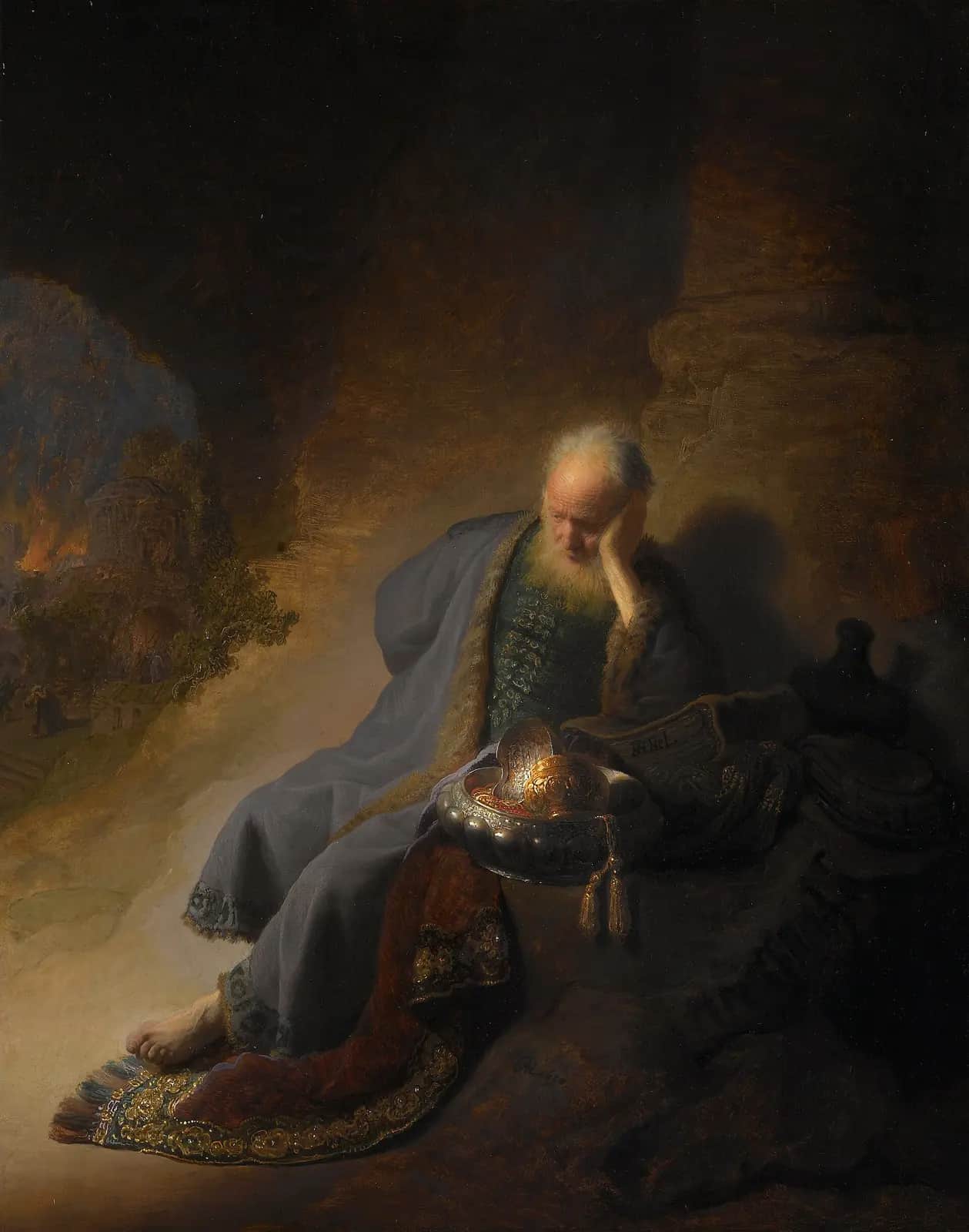
The idea
'Our Lady' is Greek kyria, a royal 'Lady,' the queen. 'Mary is Our Lady… because Jesus actually is king of the universe — not because ancient Christians sold out to paganism. There was no need to borrow the idea of a queen from paganism, since they had already gotten it from Judaism.' The Catechism's summary of the Assumption calls her 'exalted by the Lord as Queen over all things' (CCC 966, in the words of Lumen Gentium 59, which builds on Pius XII's 1950 definition). The one recorded group who did worship Mary, the Collyridians, offered her the sacrificial loaf (kollyra) of the Eucharist, and Epiphanius condemned them with the very Jeremiah passage the Baptist pastor used on Pitre: 'Mary is to be held in honor, but the Lord is to be worshiped!' The criterion is sacrifice: in ancient Judaism and Christianity 'the essence of worship was sacrifice'; honour, petition and praise can all be given to humans. Protestants, whose worship is doxology without sacrifice, therefore read Catholic praise of Mary as idolatry — 'one of the main reasons' the two sides talk past each other.
Key verses
- Jeremiah 44:17 — the queen of heaven receiving sacrifice — Epiphanius' text (LXX 51:18).
- Jeremiah 7:18 — cakes for the queen of heaven — the pastor's text.
- 1 Kings 2:19 — the true model: the king's mother honoured, not worshipped.
The connection
| Old Testament root | New Testament fulfilment | |
|---|---|---|
| A goddess offered sacrifice | → | A queen mother honoured, petitioned and praised — never offered sacrifice |
The answer to the book's opening objection is a distinction the Bible itself makes: sacrifice is worship and belongs to God alone. Catholics do not offer the Eucharist to Mary; the Collyridians did, and the Church condemned them for it.
Sources
- Epiphanius of Salamis — Panarion 78.23; 79.7–9 (pp 87–88) · read
- Munificentissimus Deus (Pius XII, 1950) — CCC 966 (p 87) · read
- Catechism of the Catholic Church — CCC 971 (p 89) · read