Definition
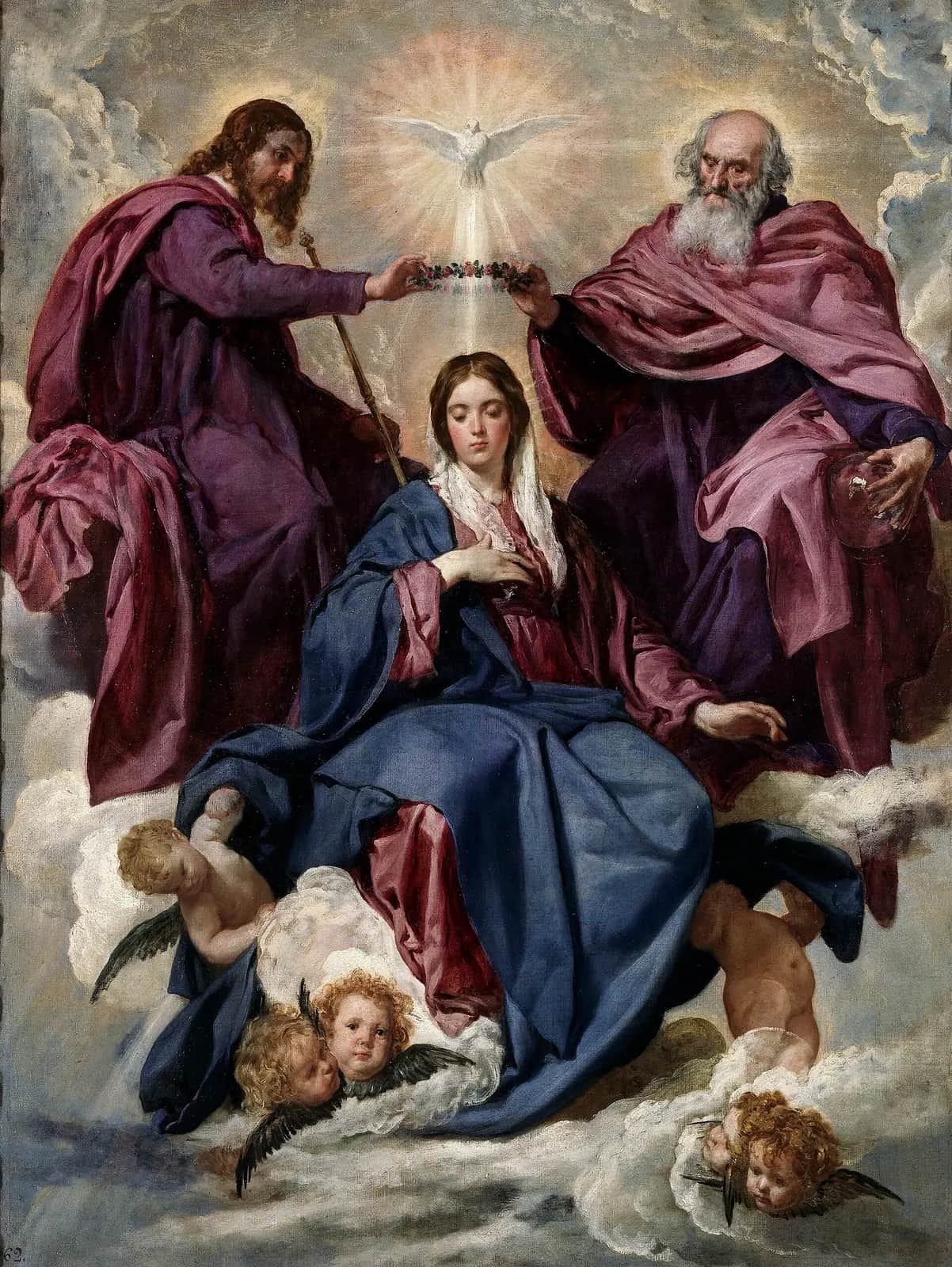
Mary reigns with her Son as Queen. In the kingdom of David the queen was not one of the king's wives but his mother, the gebirah, who wore a crown, sat at the king's right hand and carried the people's petitions to him (1 Kings 2:19). If Jesus is the Davidic king, his mother holds that office; Elizabeth already greets her as "the mother of my Lord". Pius XII set out the teaching in Ad Caeli Reginam (1954); see also Lumen Gentium 59 and Catechism §966.
Start here
Begin with the question of who the queen was in David's kingdom, then the four marks of the queen mother, then the Magnificat and Revelation 12 read in that light.
From Jewish Roots of Mary
- 1.Is calling Mary 'Queen of Heaven' the pagan idolatry Jeremiah condemned?
This is the objection with which the book opens: a Baptist pastor challenged Pitre with Jeremiah's 'queen of heaven' (pp 11–12). The queen of heaven Jeremiah denounces was a goddess whom Israelites worshiped with cakes, incense and drink offerings — a false deity given the sacrifice due to God alone (Pitre does not name the goddess). Mary's queenship is a wholly different thing: the Davidic office of the queen mother (gebirah), a human mother honored as intercessor, never worshiped as a goddess — the answer chapter 4 develops, where Epiphanius himself turns Jeremiah's verse against those who offered sacrifice to Mary (p 88).
- 2.A kingdom needs a queen — the four marks of the gebirah
The gospel is the arrival of a kingdom — 'the empire of God' — and God promised David a throne 'for ever.' Jesus is not only a new Adam and a new Moses but a new David, so the question follows: 'If Jesus is the new Davidic king, then who is the new queen?' Pitre answers from the Old Testament's portrait of the queen mother (gebirah, 'great lady') under four heads: the queen is the king's mother, not his wife; she reigns with the king; she is a powerful intercessor; and she appears in the prophecies of the future king. He then imagines first-century Jewish women asking not only 'Who will be the mother of the Messiah?' but 'Who will be the new queen mother?'
- 3.In David's kingdom, who was the queen — and why?
Not the king's wife (kings had many) but the king's mother — the gebirah, 'great lady.' Solomon rose, bowed, and set Bathsheba on a throne (Hebrew kisse', the very word used of Solomon's own throne in the previous verse — 'seat' in some translations undersells it, p 69) at his right hand, and she carried petitions to him. Almost every king of Judah is introduced with the name of his mother (p 75).
- 4.'Throne,' not 'seat' — kisse' and thronos in 1 Kings 2:19, and the Bathsheba reversal
Some English versions say Solomon had a 'seat' brought for his mother. The Hebrew is kisse', the Greek thronos — 'the exact same word used in the previous verse to describe Solomon's throne.' 'It is hard to overestimate the significance of this passage.' Pitre also sets it beside 1 Kings 1: while David lived, Bathsheba bowed and did obeisance to the king and called him 'my lord'; once her son reigns 'the roles are reversed' — the king rises, bows to her, and enthrones her at his right hand. The obvious implication is that the king's mother, not his wife, is queen.
- 5.The right hand means shared authority — Psalm 110:1, the crown of Jeremiah 13:18, an office not a title
The queen mother 'held an official position in the kingdom, second in rank only to the king himself.' Two symbols show it. She wore a crown: Jeremiah tells 'the king and the queen mother' together to humble themselves, for their crowns are coming down. And she sat or stood at the king's right hand, as Psalm 45 pictures the queen 'in gold of Ophir' — Old Testament scholars agree this queen is the king's mother. The right hand means 'a share in his authority,' just as the king who sits at God's right hand (Psalm 110:1) shares in God's authority. After the monarch himself, she has 'the place of highest honor.'
- 6.
- 7.
- 8.
- 9.
- 10.
- 11.