The idea
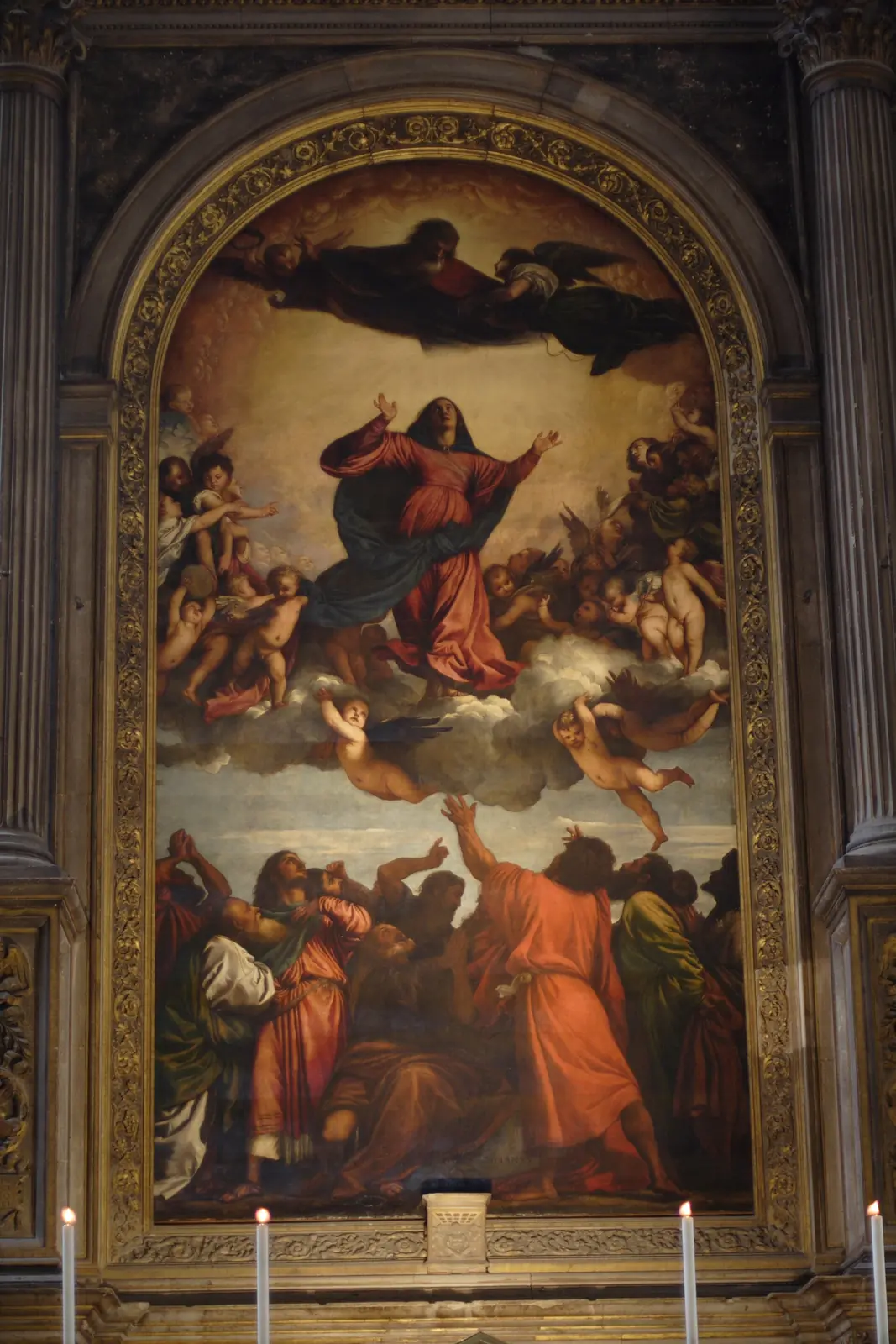
Step one: the New Testament presents Jesus as the new David (Matthew 1:1). Step two: once David was king, one of his first acts was to bring the Ark up to Jerusalem and place it inside the tent he had pitched for it (2 Samuel 6:17), remembered in Psalm 132:8. Step three: 'if Jesus is the new David, who has ascended into the heavenly Jerusalem, then it makes sense that he would likewise bring the true Ark of the Covenant — his mother — into the heavenly Temple.' Pitre is careful about history: the earliest references to Mary being taken up argue from the Woman 'in heaven' of Revelation 12; later writers such as Modestus of Jerusalem and John Damascene linked it with the Ark — 'not carried like Moses' ark of old, drawn by oxen, but escorted by heaven's holy angels.' Benedict XVI adds the point of the body: the living Ark is not Mary's soul only but her body, in which the Word became flesh.
Key verses
- Matthew 1:1 — Jesus, son of David.
- 2 Samuel 6:17 — David sets the Ark inside the tent.
- Psalm 132:8 — 'Arise, O LORD, into thy rest; thou, and the ark.'
- Revelation 12:1 — the Woman 'in heaven' — the earliest Assumption text.
- John 1:14 — the Word made flesh in Mary's body (Benedict XVI).
The connection
| Old Testament root | New Testament fulfilment | |
|---|---|---|
| David brings the Ark into the sanctuary in Jerusalem | → | Christ the new David brings his mother into the heavenly temple |
The Assumption is a Davidic act. Its biblical logic is the same as the Ark's procession, and its history in the Church ran from Revelation 12 to the Ark typology that Pius XII finally cited.
Sources
- Modestus of Jerusalem — Encomium on the Dormition 4 (p 63) · read
- John Damascene — On the Dormition II.2 (p 63) · read
- Munificentissimus Deus (Pius XII, 1950) — §26 (p 63) · read
- Benedict XVI — Assumption homily, 2011 (p 64) · read