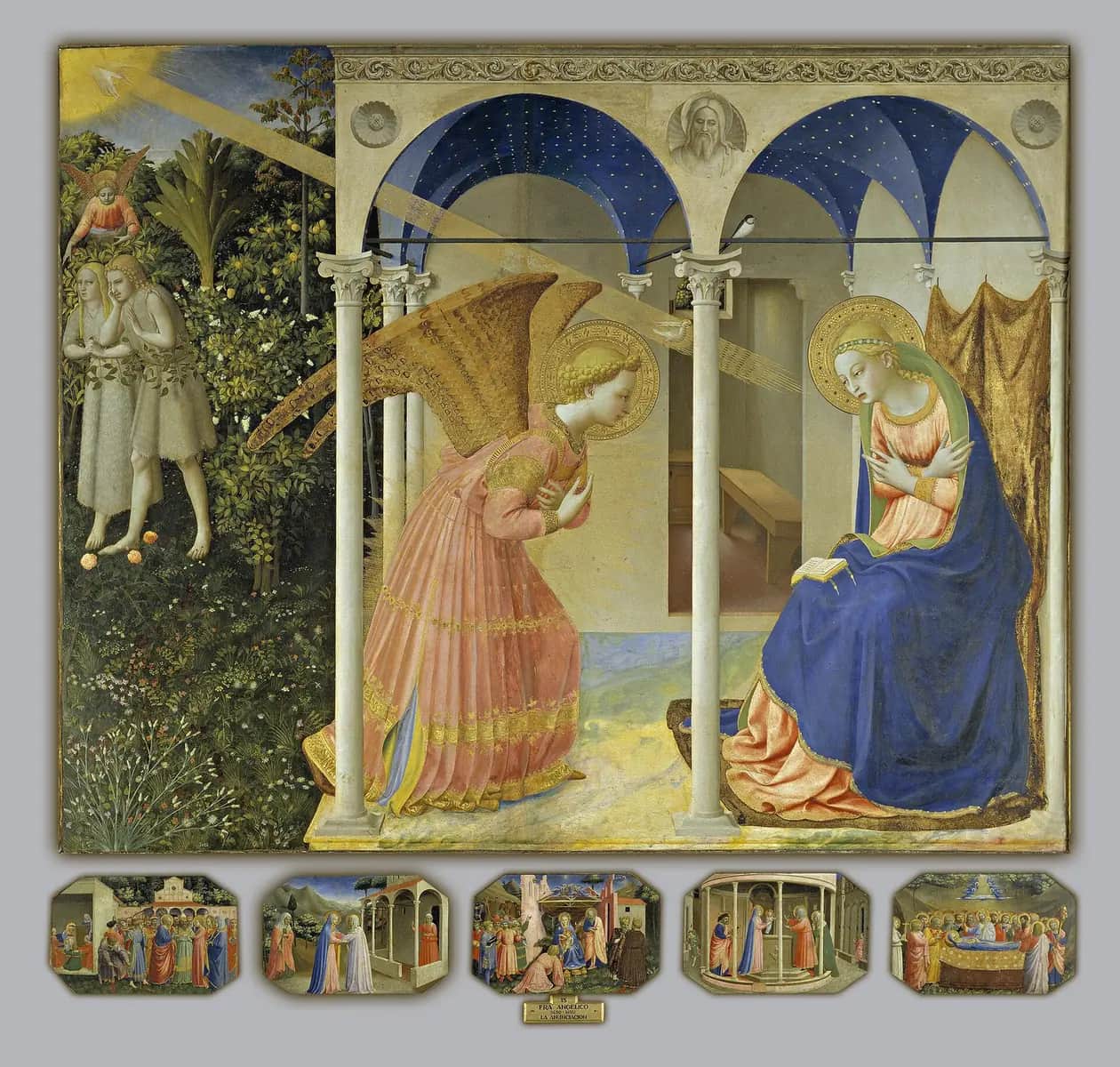
The idea
Pitre stacks three clues that Mary meant to remain a virgin for life: (1) her reply to Gabriel, 'How shall this be, since I do not know man?' — a strange thing for a betrothed woman to say unless she had already resolved on virginity; (2) the Law's provision letting a married woman take a binding vow of abstinence her husband upholds — Joseph's role; and (3) the couple's abstinence on the wedding night and all through the pregnancy.
Key verses
- Luke 1:34 — 'How shall this be, since I do not know man?' — an implicit vow.
- Numbers 30:13 — a married woman's vow 'to afflict the soul' — which includes abstinence (Leviticus 16:29; Mishnah Yoma 8:1, p 98); Numbers 30:6 — upheld by her husband's silence; Numbers 30:15 — binding on him under penalty of sin (p 100).
- Matthew 1:25 — Joseph 'knew her not' until she had borne her son.
The connection
| Old Testament root | New Testament fulfilment | |
|---|---|---|
| Her question · the Law of vows · their abstinence | → | A vow of lifelong virginity |
The three clues converge: Luke 1:34 hints at a prior resolve, Numbers 30:13-16 shows such a vow was possible within marriage (with Joseph as its guardian), and Matthew 1:25 records the abstinence that carried it out. Together, Pitre says, they give the best explanation; of the wedding-night abstinence on its own he says a vow is 'the only plausible explanation' (p 102). He reads them as a vow of virginity from the very start of the marriage.
Sources
- Mishnah — Yoma 8:1 (p 98) · read
- Modern scholars Pitre cites — Jacob Milgrom on 'afflict oneself'; J. Gresham Machen on the present tense of Luke 1:34 (pp 95, 98)
- Augustine of Hippo — On Holy Virginity 4.4 (p 113) · read