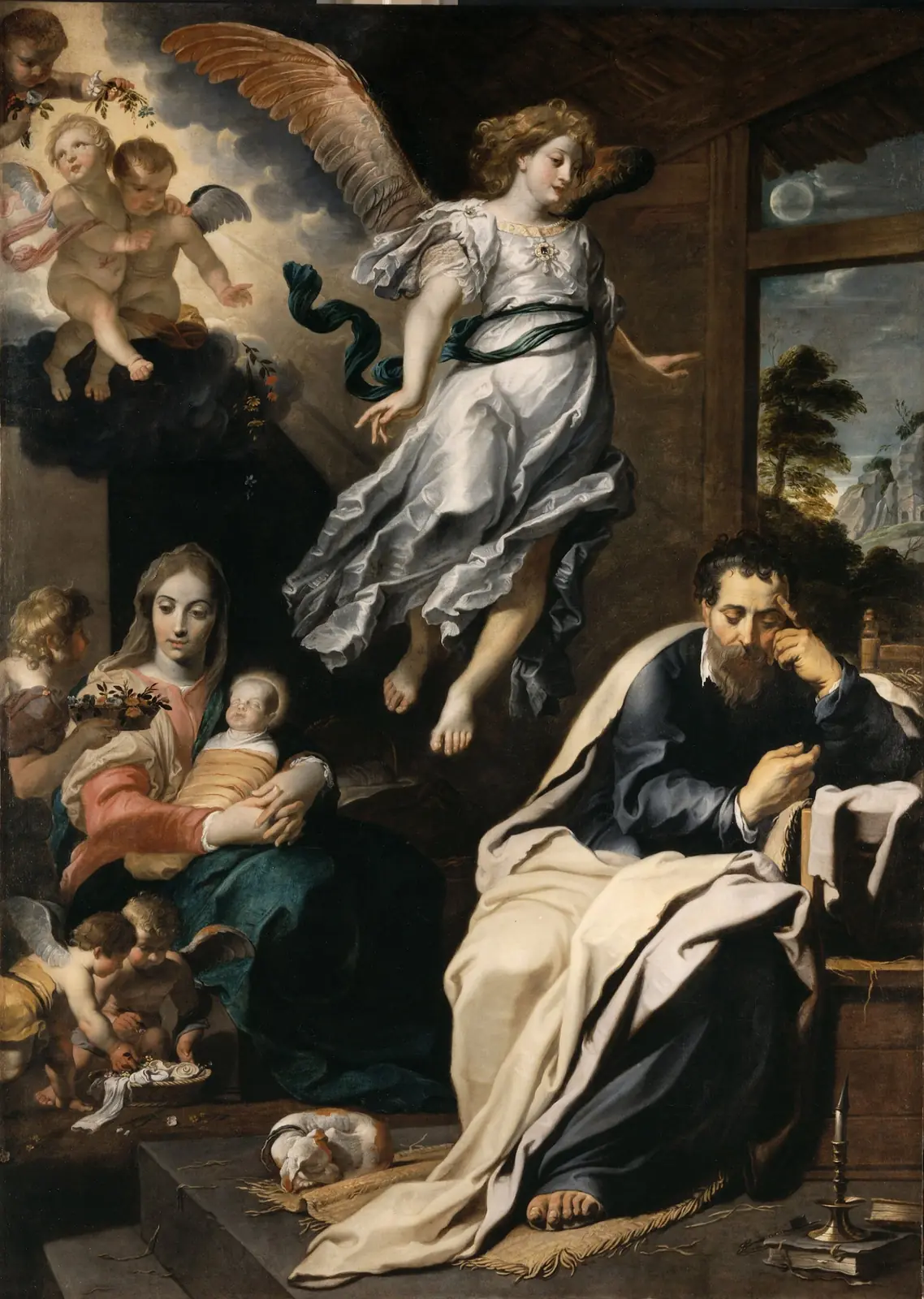
The idea
'Joseph knew her not until she had borne a son.' 'The Greek word until (heōs) simply describes a certain period of time, and does not imply anything about what happens afterward.' Three parallels: 'Sit at my right hand, until I put your enemies under your feet'; 'I am with you always, until the end of the age'; and 'the most striking example of all,' Michal 'had no child until the day of her death' — 'obviously, the use of until here doesn't imply that Michal began having children after she died!' Protestant and Catholic scholars agree; one Protestant Matthew expert calls it 'indisputable.' Matthew's reason for stressing Joseph's abstinence is not to strike at later belief in Mary's virginity but to show that Jesus could not have been Joseph's son.
Key verses
- Matthew 1:25 — 'knew her not till.'
- 2 Samuel 6:23 — Michal childless 'until the day of her death.'
- Matthew 22:44 — 'Sit… until I make thine enemies thy footstool.'
- Matthew 28:20 — 'with you… until the end of the world.'
The connection
| Old Testament root | New Testament fulfilment | |
|---|---|---|
| 'Until' in the Greek Bible: a span, not a turning point | → | Matthew 1:25: Joseph's abstinence through the pregnancy, and nothing about after |
The verse most often quoted against the perpetual virginity says nothing against it once its grammar is read, and its purpose — proving the virginal conception — is one the Catholic reading shares.