The idea
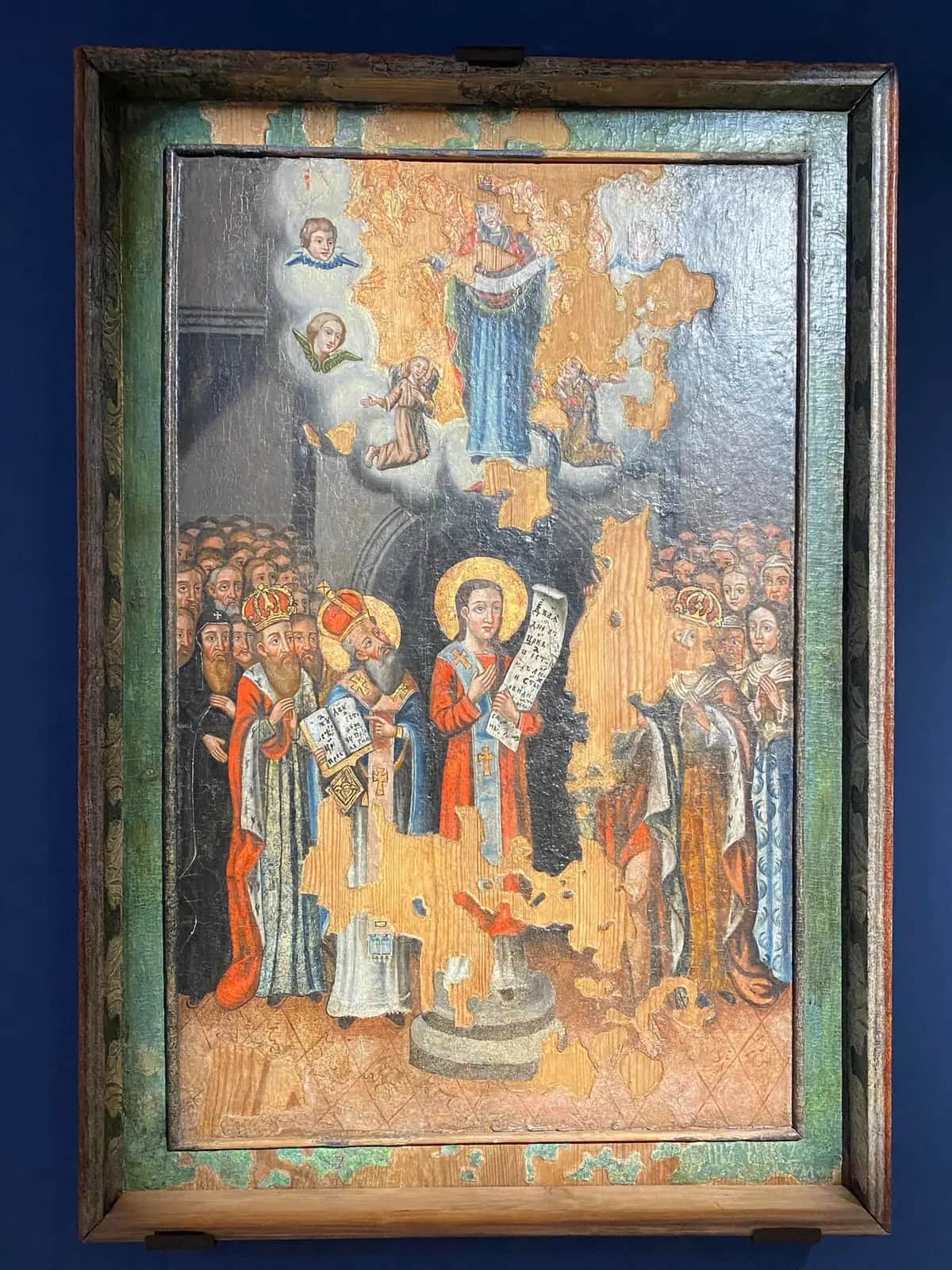
Pitre's New Testament warrant for asking Mary's intercession is short. Even secular nations honour their leaders, and those who need something from a leader ask the people closest to him. Scripture commands Christians to 'pray for one another' (James 5:16) — 'Why should such prayers cease in heaven (cf. Revelation 5:8)?' — and Mary the queen is alive in heaven (Revelation 12:1). The early Church drew the conclusion: an anonymous Egyptian papyrus prayer of the third or fourth century — 'We take refuge in your mercy, Mother of God. Do not disregard our prayers in troubling times' — Gregory Nazianzen's account of the virgin Justina imploring Mary's help, Sozomen's report of healings credited to 'Mary, the Mother of God,' and John Damascene's 'Queen over all created things.' The link runs from Jesus' divinity, to Mary as Mother of God, to asking her prayers.
Key verses
- James 5:16 — 'pray one for another.'
- Revelation 5:8 — the prayers of the saints offered in heaven.
- Revelation 12:1 — the queen alive in heaven.
- 1 Kings 2:17 — the queen mother as intercessor — the Old Testament root.
The connection
| Old Testament root | New Testament fulfilment | |
|---|---|---|
| Subjects petition the king through the queen mother | → | Christians ask the Mother of God to pray for them |
Marian intercession is the Davidic pattern carried into heaven and grounded on a New Testament command. The earliest prayers to Mary show that Christians asked her help under the title Mother of God well before any council defined it.
Sources
- Sub tuum praesidium (p 85) · read
- Gregory of Nazianzus — Sermon 24.9–11 (p 86) · read
- Sozomen — Ecclesiastical History 7.5.3 (p 86) · read
- John Damascene — On the Orthodox Faith 4.14; Homily on the Dormition 1.2 (p 86) · read · read