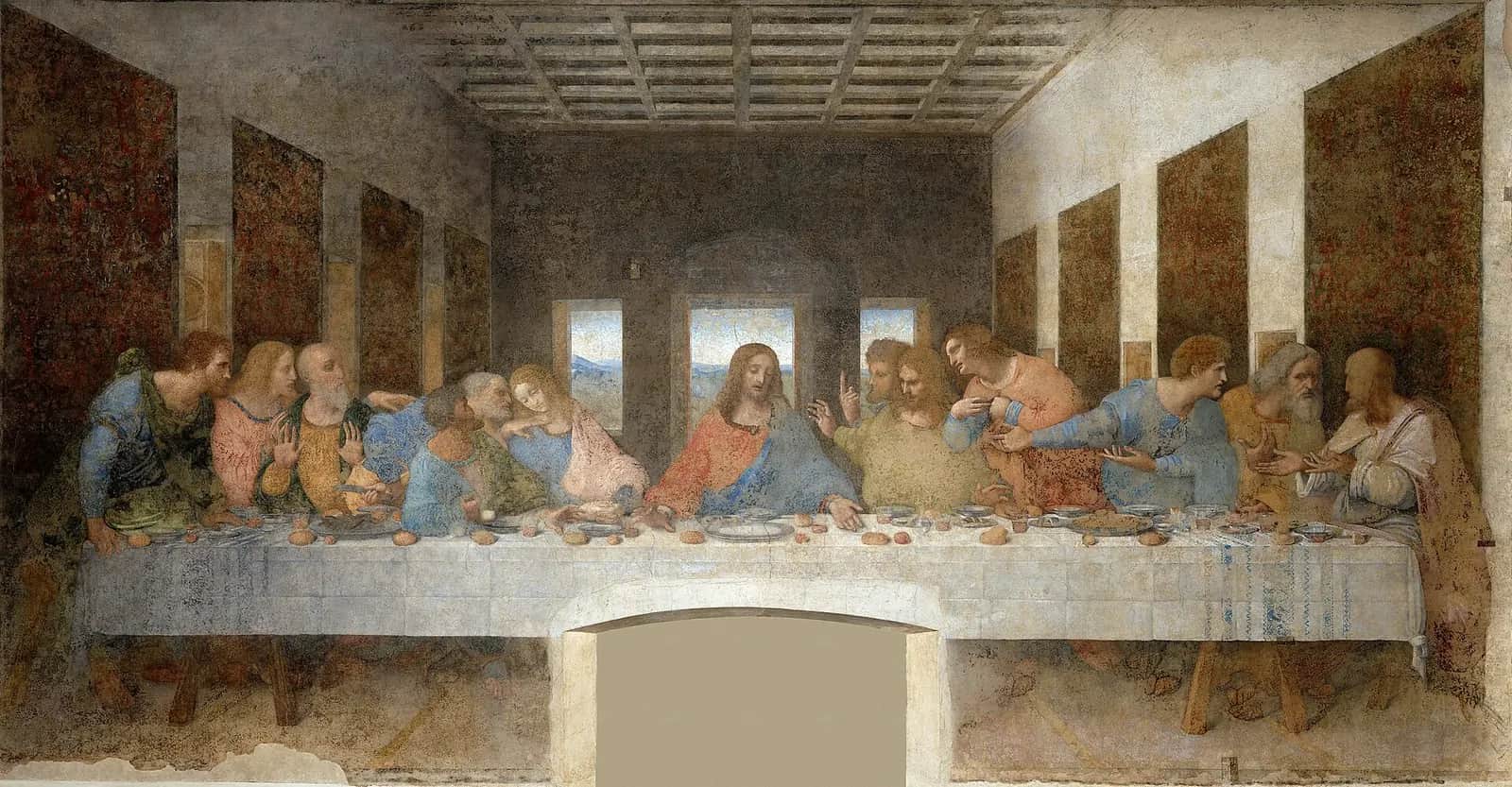
John 6:53 (WEB)
Jesus therefore said to them, “Most certainly I tell you, unless you eat the flesh of the Son of Man and drink his blood, you don’t have life in yourselves.
As quoted in the map (KJV)
John 6:53 (KJV)
Then Jesus said unto them, Verily, verily, I say unto you, Except ye eat the flesh of the Son of man, and drink his blood, ye have no life in you.
Key words
- φάγητε τὴν σάρκαphagēte tēn sarka · Greek
- 'eat the flesh' — the same word sarx as 'the Word was made flesh' (1:14).
- πίητε αὐτοῦ τὸ αἷμαpiēte autou to haima · Greek
- 'drink his blood' — the Eucharistic realism of the Bread of Life discourse.
Why it matters
Jesus, having called himself the true bread from heaven, insists that his flesh must be eaten. Pitre lines this up with the contents of the ark: the ark held the manna, and Mary held the Bread of Life, the true manna, in her womb. The ark's three treasures — word, bread, priesthood — are all fulfilled in the one Son she carried.
Catechism · 3
The Sacrament of the Eucharist
“The Lord addresses an invitation to us, urging us to receive him in the sacrament of the Eucharist: "Truly, I say to you, unless you eat the flesh of the Son of man and drink his blood, you have no life in you."” — Catechism footnote: Jn 6:53.
The Seven Petitions
“For this reason the specifically Christian sense of this fourth petition concerns the Bread of Life: the Word of God accepted in faith, the Body of Christ received in the Eucharist.” — Catechism footnote: Cf. Jn 6:26-58.
“Taken literally (epi-ousios: "super-essential"), it refers directly to the Bread of Life, the Body of Christ, the "medicine of immortality," without which we have no life within us.” — Catechism footnote: St. Ignatius of Antioch, Ad Eph. 20, 2 PG 5, 661; Jn 6:53-56.
Fathers and councils · 28
John Damascene
“And again, He that eateth Me, shall live.” — editor's note: St. John vi. 51–55.
Read the whole comment
Cyril of Jerusalem
“Christ on a certain occasion discoursing with the Jews said, Except ye eat My flesh and drink My blood, ye have no life in you.” — editor's note: John vi. 53.
Read the whole comment
Augustine of Hippo
“When the Lord said, “Except a man eat My Flesh and drink My Blood, he shall have no life in him”?” — editor's note: John vi. 53.
Read the whole comment“Then Peter: “Thou hast the Word of life eternal: to whom shall we go?”” — editor's note: John vi. 53, etc.
Read the whole comment“After this address, too, his narrative is again borne on to one subject after another, in a sublime strain.” — editor's note: John vi. 22–72.
Read the whole comment“John, on the other hand, has said nothing about the body and blood of the Lord in this context; but he plainly certifies that the Lord spake to that effect on another occasion, with much greater fulness than here.” — editor's note: John vi. 32–64.
Read the whole comment“On the words of the Gospel, John vi. 53, “Except ye eat the flesh,” etc., and on the words of the apostles.” — the author cites it
Read the whole comment
Athanasius of Alexandria
“And as our Lord and Saviour Jesus Christ, being heavenly bread, is the food of the saints, according to this; ‘Except ye eat My flesh, and drink My blood;’ so is the devil the food of the impure, and of those who do nothing which is of the light, but work the deeds of darkness.” — editor's note: John vi. 53.
Read the whole comment
Catena Aurea on Luke
- Gregory the GreatCatena Aurea on Luke
“(John 6:53.)” — the author cites it
Read the whole comment
John Chrysostom
“John vi. 53, 54” — the author cites it
Read the whole comment
Theodoret of Cyrus
“…my blood which is shed for many for the remission of sins,” and again “Except ye eat the flesh of the Son of Man and drink His blood ye have no life in you” and “Whosoever eateth my flesh and drinketh my blood hath eternal life” “in himself” he adds.” — editor's note: John vi. 53
Read the whole comment
Tertullian
“These two baptisms He sent out from the wound in His pierced side, in order that they who believed in His blood might be bathed with the water; they who had been bathed in the water might likewise drink the blood.” — editor's note: See John vi. 53, etc.
Read the whole comment
Cyprian of Carthage
“…a distance from salvation; as He Himself threatens, and says, “Unless ye eat the flesh of the Son of man, and drink His blood, ye shall have no life in you.”” — editor's note: John vi. 53.
Read the whole comment“Moreover, He says in the same place: “Except ye eat the flesh of the Son of man, and drink His blood, ye shall have no life in you.”” — editor's note: John vi. 53.
Read the whole comment“Also in the same place: “Unless ye eat the flesh of the Son of man, and drink His blood, ye shall not have life in you.”” — editor's note: John vi. 53.
Read the whole comment
Catena Aurea on Matthew
- OrigenCatena Aurea on Matthew
“We celebrate spiritually the things which were carnally celebrated in the Law, keeping the Passover “in the unleavened bread of sincerity and truth,” [1 Cor 5:8] according to the will of the Lamb, who said, “Except ye eat my flesh and drink my blood, ye shall not have life in you.” [John 6:53]” — the author cites it
Read the whole comment
Leo the Great
“For when the Lord says, “unless ye have eaten the flesh of the Son of Man, and drunk His blood, ye will not have life in you,” you ought so to be partakers at the Holy Table, as to have no doubt whatever concerning the reality of Christ’s Body and Blood.” — editor's note: S. John vi. 53.
Read the whole comment
Clement of Alexandria
““Eat ye my flesh,” He says, “and drink my blood.”” — editor's note: John vi. 53, 54.
Read the whole comment
Hippolytus of Rome
“This, he says, is what is spoken by the Saviour: “If ye do not drink my blood, and eat my flesh, ye will not enter into the kingdom of heaven; but even though,” He says, “ye drink of the cup which I drink of, whither I go, ye cannot enter there.”” — editor's note: John vi. 53; Mark x. 38.
Read the whole comment
Catena Aurea on John
- Augustine of HippoCatena Aurea on John
The Jews not understanding what was the bread of peace, strove among themselves, saying, How can this man give us His flesh to eat? Whereas they who eat the bread strive not among themselves, for God makes them to…
Read the whole comment - BedeCatena Aurea on John
The Jews thought that our Lord would divide His flesh into pieces, and give it them to eat: and so mistaking Him, strove.
Read the whole comment - John ChrysostomCatena Aurea on John
As they thought it impossible that He should do as He said, i. e. give them His flesh to eat, He shews them that it was not only possible, but necessary: Then said Jesus unto them, Verily, verily, I say unto you,…
Read the whole comment - Augustine of HippoCatena Aurea on John
As if He said, The sense in which that bread is eaten, and the mode of eating it, ye know not; but, Except ye eat the flesh of the Son of man, and drink His blood, ye have no life in you.
Read the whole comment - BedeCatena Aurea on John
And that this might not seem addressed to them alone, He declares universally, Whoso eateth My flesh, and drinketh My blood, hath eternal life.
Read the whole comment - Augustine of HippoCatena Aurea on John
And that they might not understand him to speak of this life, and make that an occasion of striving, He adds, Hath eternal life. This then he hath not who eateth not that flesh, nor drinketh that blood. The temporal…
Read the whole comment - Theophylact of OhridCatena Aurea on John
For it is not the flesh of man simply, but of God: and it makes man divine, by inebriating him, as it were, with divinity.
Read the whole comment - Augustine of HippoCatena Aurea on John
There are some who promise men deliverance from eternal punishment, if they are washed in Baptism and partake of Christ’s Body, whatever lives they live. The Apostle however contradicts them, where he says, The works…
Read the whole comment - Augustine of HippoCatena Aurea on John
By this meat and drink then, He would have us understand the society of His body, and His members, which is the Church, in the predestined, and called, and justified, and glorified saints and believers. The Sacrament…
Read the whole comment
Cross-references · 25
Cited together in Origen on Matthew 26:17–19 (Catena Aurea).
Cited together in Origen on Matthew 26:17–19 (Catena Aurea).
Cited together in Sermons Sermon 91.
Cited together in Sermons Sermon 91.
Cited together in Sermons Sermon 91.
Cited together in Catechism §2837.
Cited together in On Baptism Chapter 15.
Cited together in Catechism §2837.
Cited together in Catechism §2837.
Cited together in Catechism §2837.
Cited together in Three Books of Testimonies Against the Jews I.23.
Cited together in Sermons Sermon 91.
Cited together in Three Books of Testimonies Against the Jews I.23.
Cited together in Three Books of Testimonies Against the Jews I.23.
Cited together in Three Books of Testimonies Against the Jews I.23.
Cited together in Three Books of Testimonies Against the Jews I.23.
Cited together in Three Books of Testimonies Against the Jews I.23.
Cited together in Three Books of Testimonies Against the Jews I.23.
Cited together in On Baptism Chapter 15.
Cited together in Sermons Sermon 91.
Cited together in Origen on Matthew 26:17–19 (Catena Aurea).
Cited together in Origen on Matthew 26:17–19 (Catena Aurea).
Cited together in Origen on Matthew 26:17–19 (Catena Aurea).
Cited together in Gregory the Great on Luke 2:6–7 (Catena Aurea).
Cited together in Gregory the Great on Luke 2:6–7 (Catena Aurea).