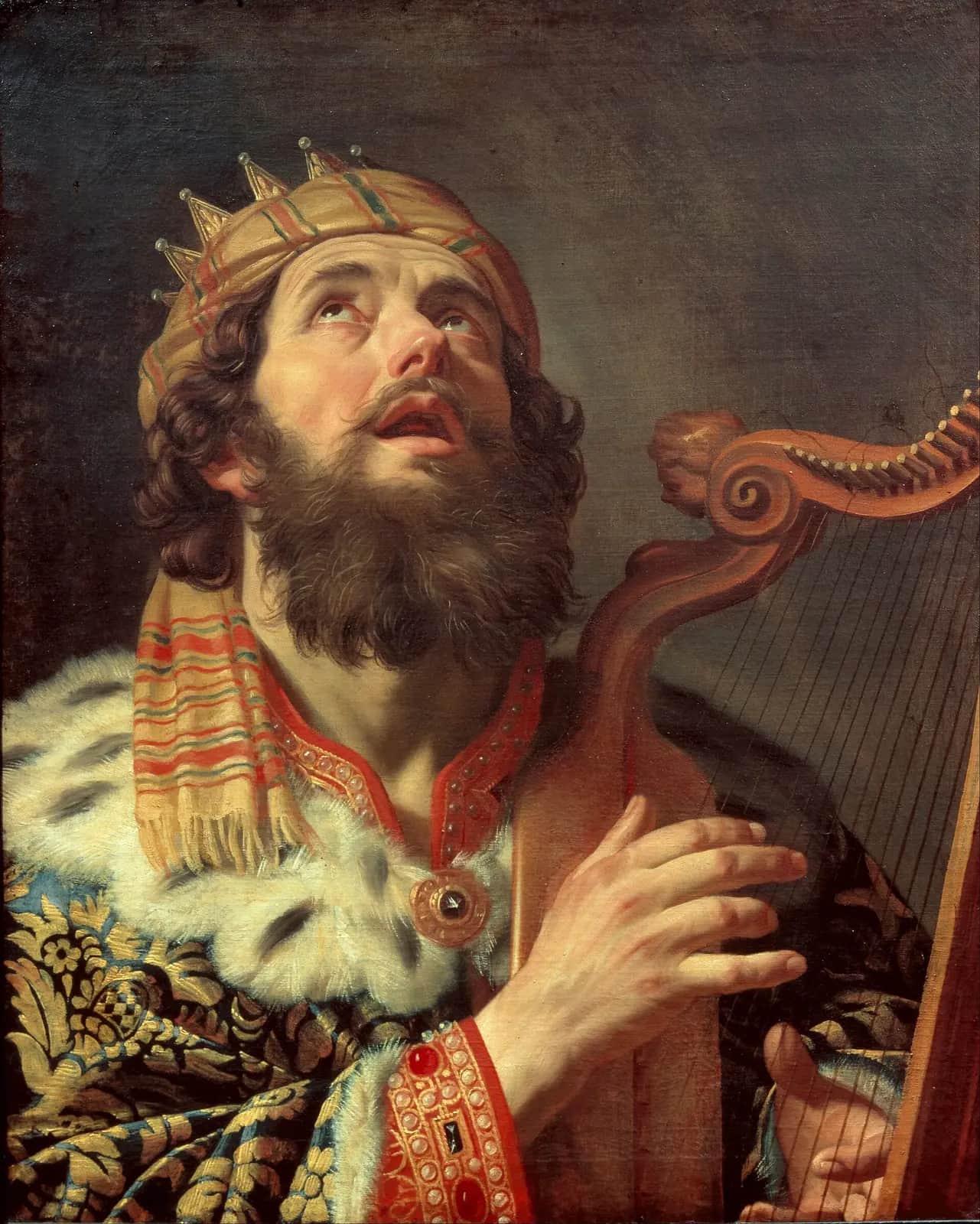
Psalm 2:7 (WEB)
I will tell of the decree: The LORD said to me, “You are my son. Today I have become your father.
Catechism · 4
In the Fullness of Time
“Ask of me, and I will make the nations your heritage, and the ends of the earth your possession."” — Catechism footnote: Ps 2:7-8; cf. Acts 13:33.
The Seven Petitions
“Therefore, "today" is when Christ rises.” — Catechism footnote: St. Ambrose, De Sacr. 5, 4, 26: PL 16, 453A; cf. Ps 2:7.
"And in Jesus Christ, His Only Son, Our Lord"
“Those who called Jesus "son of God", as the Messiah of Israel, perhaps meant nothing more than this.” — Catechism footnote: Cf. I Chr 17:13; Ps 2:7; Mt 27:54; Lk 23:47.
On the Third Day He Rose from the Dead
“So St. Paul could declare to the Jews: "What God promised to the fathers, this he has fulfilled to us their children by raising Jesus; as also it is written in the second psalm, 'You are my Son, today I have begotten you.'"” — Catechism footnote: Acts 13:32-33; cf. Ps 2:7.
Fathers and councils · 36
Tertullian
“The Father took pleasure evermore in Him, who equally rejoiced with a reciprocal gladness in the Father’s presence: “Thou art my Son, to-day have I begotten Thee;” even before the morning star did I beget Thee.” — editor's note: Ps. ii. 7.
Read the whole comment“I bid you also observe, that on my side I advance the passage where the Father said to the Son, “Thou art my Son, this day have I begotten Thee.”” — editor's note: Ps. ii. 7.
Read the whole comment“Ask of Me, and I will give Thee Gentiles as Thine heritage, and as Thy possession the bounds of the earth.”” — editor's note: Ps. ii. 7, 8.
Read the whole comment“Ask of me, and I shall give Thee the heathen for Thine inheritance, and the uttermost parts of the earth for Thy possession.”” — editor's note: Ps. ii. 7.
Read the whole comment“On the present (as also on the former) occasion, therefore, the cloud was not silent; but there was the accustomed voice from heaven, and the Father’s testimony to the Son; precisely as in the first Psalm He had said, “Thou art my Son, today have I begotten thee.”” — editor's note: Ps. ii. 7.
Read the whole comment
Athanasius of Alexandria
“But he is not in fact thus referred to; but the Father shews Him to be His own proper and only Son, saying, ‘Thou art My Son,’ and ‘This is My beloved Son, in whom I am well pleased.’” — editor's note: Ps. ii. 7; Matt. iii. 17.
Read the whole comment“But to the Son contrariwise; for he has not said ‘I made,’ but ‘I begat,’ and ‘He begets me,’ and ‘My heart uttered a good Word.’” — editor's note: Ps. ii. 7.
Read the whole comment“But it is not so; for in truth much is said in the Old also about the Son, as in the second Psalm, ‘Thou art My Son, this day have I begotten Thee;’ and in the ninth the title, Unto the ‘end concerning the hidden things of the Son, a Psalm of David;’ and in the forty-fourth, ‘Unto the end, concerning the…” — editor's note: Ps. ii. 7.
Read the whole comment
Cyril of Jerusalem
“…being of a contrary mind to their own Prophets, who in the Divine Scriptures affirm, The Lord said unto me, Thou art My Son, this day have I begotten thee.” — editor's note: Ps. ii. 7.
Read the whole comment“I am not the first to say this, but the Psalmist in the person of the Son saith, The Lord said unto Me, Thou art My Son.” — editor's note: Ps. ii. 7.
Read the whole comment“But we call Him the Son of God, not of ourselves, but because the Father Himself named Christ His Son: and a true name is that which is set by fathers upon their children.” — editor's note: Compare the passages in which Cyril quotes Ps. ii. 7, as Cat. vii. 2; x. 2; xi. 5; xii. 18.
Read the whole comment“The Lord said unto Me, Thou art My Son; this day have I begotten Thee: and a few words further on, Thou shalt rule them with a rod of iron.” — editor's note: Ps. ii. 7, 9. The passage is interpreted by Cyril (xi. 5) of the eternal generation of the Son: here it refers to His Incarnation, or perhaps is meant only to…
Read the whole comment
Eusebius of Caesarea
“Ask of me, and I will give thee the nations for thine inheritance, and the uttermost parts of the earth for thy possession.”” — editor's note: Ps. ii. 7, 8.
Read the whole comment
Augustine of Hippo
“…My Son art Thou, I have this day begotten Thee; demand of Me and I will give Thee nations as Thy inheritance, and as Thy possession the bounds of the earth.”” — editor's note: Ps. ii. 7, 8; Heb. i. 5; v. 5; Acts. xiii. 33
Read the whole comment“Thy today is eternity; therefore didst Thou beget the Co-eternal, to whom Thou saidst, “This day have I begotten Thee.”” — editor's note: Ps. ii. 7, and Heb. v. 5.
Read the whole comment““The Lord hath said unto me, Thou art My Son, to-day have I begotten Thee” (ver. 7).” — the author cites it
Read the whole comment“…Luke, and which bears that the words heard in the heavenly voice were those that are written in the Psalm, “Thou art my Son, this day have I begotten Thee;” although it is said not to be found in the more ancient Greek codices, yet if it can be established by any copies worthy of credit, what results but that we…” — editor's note: Ps. ii. 7.
Read the whole comment“From the eternal Father begotten, from eternity begotten, in eternity begotten: with no beginning, no bound, no space of breadth; because He is what is, because Himself is “He that Is.”” — editor's note: Ps. ii. 7.
Read the whole comment“…is found that God the Father also is called Lord in many places,—for instance, “The Lord hath said unto me, Thou art my Son; this day have I begotten Thee;” and again, “The Lord said unto my Lord, Sit Thou at my right hand;” since also the Holy Spirit is found to be called Lord, as where the apostle says, “Now the…” — editor's note: Ps. ii. 7
Read the whole comment“…from Him who says to Him in the Psalms, “Thou art my Son; this day have I begotten Thee; ask of me, and I shall give Thee the heathen for Thine inheritance;” and who has “put all things under His feet.”” — editor's note: Ps. ii. 7, 8
Read the whole comment“And they are called a day, “This day have I begotten thee.”” — editor's note: Ps. ii. 7.
Read the whole comment“Whence that announcement of the Father which was heard after His baptism, “This day have I begotten Thee,” referred not to that one day of time on which He was baptized, but to the one day of an unchangeable eternity, so as to show that this man was one in person with the Only-begotten.” — editor's note: Ps. ii. 7; Heb. i. 5, v. 5. It is by a mistake that Augustin quotes these words as pronounced at our Lord’s baptism.
Read the whole comment“Ask of me, and I will give Thee the nations for Thine inheritance.”” — editor's note: Ps. ii. 7, 8.
Read the whole comment“Listen to the Father speaking in the passage where thou readest, “The Lord said unto me, Thou art my Son:” listen to Him also teaching, in that where thou readest, “Every man that hath heard, and hath learned of the Father, cometh unto me.”” — editor's note: Ps. ii. 7.
Read the whole comment“Ask of me, and I will give Thee the Gentiles for Thine inheritance, and the uttermost parts of the earth for Thy possession.”” — editor's note: Ps. ii. 6–8.
Read the whole comment
Justin Martyr
“…voice, which was uttered also by David when he spoke, personating Christ, what the Father would say to Him: ‘Thou art My Son: this day have I begotten Thee;’ [the Father] saying that His generation would take place for men, at the time when they would become acquainted with Him: ‘Thou art My Son; this day have I…” — editor's note: Ps. ii. 7.
Read the whole comment“For this devil, when [Jesus] went up from the river Jordan, at the time when the voice spake to Him, ‘Thou art my Son: this day have I begotten Thee,’ is recorded in the memoirs of the apostles to have come to Him and tempted Him, even so far as to say to Him, ‘Worship me;’ and Christ answered him, ‘Get thee…” — editor's note: Ps. ii. 7; Matt. iii. 17.
Read the whole comment“Ask of Me, and I shall give Thee the nations for Thine inheritance, and the uttermost parts of the earth for Thy possession.’” — editor's note: Ps. ii. 7 f.
Read the whole comment
Theodoret of Cyrus
“It is also written in the Gospel, ‘This is My beloved Son in whom I am well pleased;’ and in the Psalms the Saviour says, ‘The Lord said unto Me, Thou art My Son.’” — editor's note: Ps. ii. 7
Read the whole comment“The Lord hath said unto me ‘Thou art my Son this day have I begotten Thee; ask of me and I shall give Thee the heathen for thine inheritance and the uttermost parts of the earth for thy possession.’”” — editor's note: Psalm ii. 6, 7, 8, lxx.
Read the whole comment
Ambrose of Milan
“For he, in reading in the second psalm of the Father saying to the Son, “Thou art My Son, this day have I begotten Thee,” noted the word “to-day,” not “yesterday,” referring this which was spoken of the assumption of our flesh to the eternity of the divine generation; of which…” — editor's note: Ps. ii. 7.
Read the whole comment“And the Father says: “I have begotten;” He does not say: “I have created.”” — editor's note: Ps. ii. 7.
Read the whole comment
John Chrysostom
“Thus we see that both David and Abraham, when they were come up to the highest pitch of virtue, then best fulfilled this; and would call themselves, the one, “earth and ashes,”the other, “a worm;”and all the saints too, like these, acknowledge their own wretchedness.” — editor's note: Ps. ii. 7.
Read the whole comment
Hilary of Poitiers
“Nor are we left in doubt how He was thus anointed with the Spirit of God and with power, when we listen to the Father’s voice, as it spoke when He came up out of the Jordan, Thou art My Son, this day have I begotten Thee.” — editor's note: Ps. ii. 7. The last words occur in neither in St. Matt. (iii. 17), nor St. Mark (i. 11), nor St. Luke (iii. 22) : but there is evidence of the existence of…
Read the whole comment
Aphrahat
“David said:—Thou art My Son; today have I begotten Thee.” — editor's note: Ps. ii. 7.
Read the whole comment
Cyprian of Carthage
“Ask of me, and I will give Thee the nations for Thine inheritance, and the bounds of the earth for Thy possession.”” — editor's note: Ps. ii. 7, 8.
Read the whole comment
Cross-references · 70
Cited together with
Cited together in Against Praxeas Chapter 11.
Cited together in Sermons on New Testament Lessons Sermon 36.
Cited together in Against Praxeas Chapter 7 and 1 other place.
Cited together in Against Praxeas Chapter 11.
Cited together in Catechism §441 and 1 other place.
Cited together in The Five Books Against Marcion III.19.
Cited together in Against Praxeas Chapter 7 and 1 other place.
Cited together in Against Praxeas Chapter 7.
Cited together in Catechism §441.
Cited together in Catechism §441.
Cited together in Dialogue with Trypho Chapter 88.
Cited together in Dialogue with Trypho Chapter 122.
Cited together in Dialogue with Trypho Chapter 122 and 1 other place.
Cited together in Dialogue with Trypho Chapter 122.
Cited together in Dialogue with Trypho Chapter 122.
Cited together in Against Praxeas Chapter 11.
Cited together in Dialogue with Trypho Chapter 122.
Cited together in The Five Books Against Marcion III.19.
Cited together in The Five Books Against Marcion III.19.
Cited together in The Five Books Against Marcion III.19.
Cited together in Catechism §441.
Cited together in On the Holy Trinity II.18.
Cited together in On the Holy Trinity II.18.
Cited together in On the Holy Trinity II.18.
Cited together in On the Holy Trinity II.18.
Cited together in Catechism §441.
Cited together in Dialogue with Trypho Chapter 103.
Cited together in The Enchiridion Chapter 49.
Cited together in Dialogue with Trypho Chapter 103 and 1 other place.
Cited together in Dialogue with Trypho Chapter 103.
Cited together in Dialogue with Trypho Chapter 103.
Cited together in Catechism §2836.
Cited together in Dialogue with Trypho Chapter 122.
Cited together in Harmony of the Gospels II.15.
Cited together in Three Books of Testimonies Against the Jews II.9.
Cited together in Three Books of Testimonies Against the Jews II.9.
Cited together in Three Books of Testimonies Against the Jews II.9.
Cited together in Sermons on New Testament Lessons Sermon 36.
Cited together in Sermons on New Testament Lessons Sermon 36.
Cited together in Dialogue with Trypho Chapter 103.
Cited together in Exposition of the Christian Faith V.2 and 1 other place.
Cited together in Catechism §653.
Cited together in Exposition of the Christian Faith V.2.
Cited together in Tractates on the Gospel of John Tractate 77.
Cited together in Catechism §653 and 1 other place.
Cited together in Catechism §653 and 2 other places.
Cited together in Exposition of the Christian Faith V.2.
Cited together in Exposition of the Christian Faith V.2.
Cited together in Exposition of the Christian Faith V.2.
Cited together in The Enchiridion Chapter 49.
Cited together in Confessions XI.13.
Cited together in Catechism §2606.
Cited together in Exposition of the Christian Faith V.2.
Cited together in Catechism §441.
Cited together in Dialogue with Trypho Chapter 122.
Cited together in Catechism §2836.
Cited together in Catechism §441.
Cited together in Catechism §441.
Cited together in The Five Books Against Marcion III.19.
Cited together in The Five Books Against Marcion III.19.
Cited together in The Five Books Against Marcion III.19.
Cited together in Catechism §441.
Cited together in The Five Books Against Marcion III.19.
Cited together in Catechism §441.
Cross-reference given by the World English Bible's translators.
Cross-reference given by the World English Bible's translators.
Cross-reference given by the World English Bible's translators.
Quoted in
Acts 13:33 takes up the words of Psalm 2:7 (10 words in common).
Hebrews 1:5 takes up the words of Psalm 2:7 (10 words in common).
Hebrews 5:5 takes up the words of Psalm 2:7 (10 words in common).