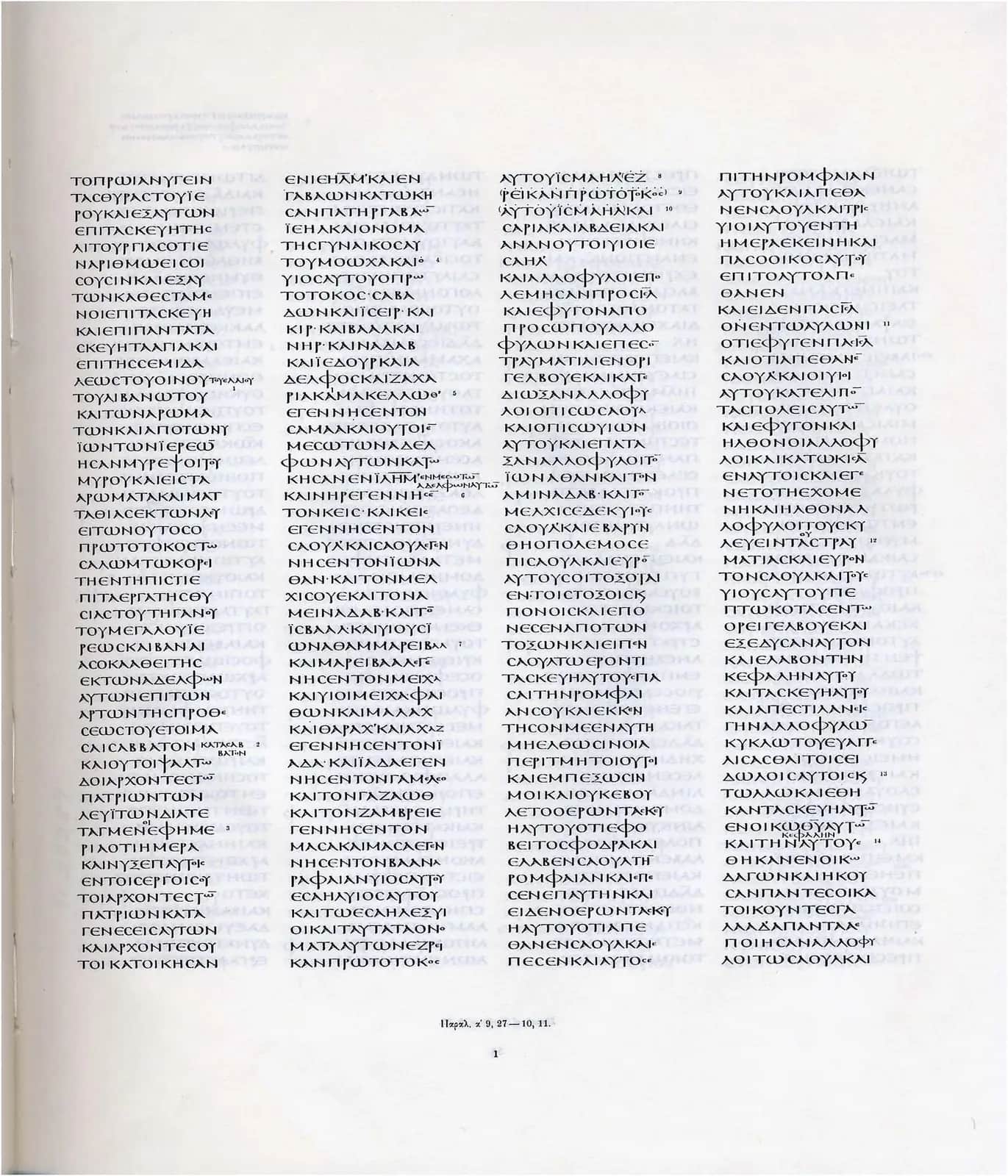
Wisdom 2:24 (WEB)
but death entered into the world by the envy of the devil, and those who belong to him experience it.
As quoted in the map (KJV)
Wisdom 2:24 (KJV)
Nevertheless through envy of the devil came death into the world: and they that do hold of his side do find it.
Key words
- φθόνῳ διαβόλουphthonō diabolou · Greek
- 'through envy of the devil' — diabolos, 'the slanderer,' is the Septuagint's name for Satan.
- θάνατος εἰσῆλθεν εἰς τὸν κόσμονthanatos eisēlthen eis ton kosmon · Greek
- 'death entered the world' — the same phrase Paul uses in Romans 5:12.
Why it matters
Genesis calls the tempter only 'the serpent'; the Book of Wisdom, written before Christ, names him the devil. Pitre uses this (with the Life of Adam and Eve) to show that first-century Jews already read Genesis 3 as the devil's assault on the woman (p 25). That is the bridge to Revelation 12:9, where the dragon is 'that ancient serpent, called the Devil and Satan,' at war with the Woman.
Catechism · 3
"I Believe in the Resurrection of the Body"
“Death was therefore contrary to the plans of God the Creator and entered the world as a consequence of sin.” — Catechism footnote: Cf. Wis 2:23-24.
The Tenth Commandment
“"Through the devil's envy death entered the world":” — Catechism footnote: Wis 2:24.
The Fall
“Behind the disobedient choice of our first parents lurks a seductive voice, opposed to God, which makes them fall into death out of envy.” — Catechism footnote: Cf. Gen 3:1-5; Wis 2:24.
Fathers and councils · 11
John Damascene
“For it was sin that brought death like a wild and savage beast into the world to the ruin of the human life.” — editor's note: Wisd. ii. 24.
Read the whole comment
John Cassian
- John Cassian, Conferences XVIII–XXIV XVIII.16Conference XVIII
“For he slew himself before him of whom he was envious, and destroyed himself before that he poured forth the poison of death against man: for “by the envy of the devil death entered into the world: they therefore who are on his side follow him.”” — editor's note: Wisd. ii. 24, 25.
Read the whole comment
Augustine of Hippo
“In another place He saith, “Behold there cometh the Prince of the world,” being an acute observer of all sins; “Behold,” He saith, “there cometh the Prince of this world,” with death afflicting sinners, presiding over death: for, “By the malice of the devil death came into the world.”” — editor's note: Wisd. ii. 24.
Read the whole comment
John Chrysostom
“For when the devil saw man honored, he endured not his prosperity, but used every means to destroy him. ( Wisd. ii. 24.)” — the author cites it
Read the whole comment
Jerome
“All the saints have had illwishers, and even Paradise was not free from the serpent through whose malice death came into the world.” — editor's note: Wisd. ii. 24.
Read the whole comment
Cyprian of Carthage
“Thenceforth envy rages on the earth, in that he who is about to perish by jealousy obeys the author of his ruin, imitating the devil in his jealousy; as it is written, “But through envy of the devil death entered into the world.”” — editor's note: Wisd. ii. 24. [So Lactantius, Institutes, book ii. cap. ix. in vol. vii., this series.]
Read the whole comment
Gregory of Nazianzus
“In reality it was a contest between virtue and envy: the one straining every nerve to overcome the good, the other enduring everything, that it might abide unsubdued; the one striving to smooth the way for vice,…” — editor's note: Envy, i.e., of the devil. Wisdom ii. 24. Cf. § 32 of this Oration.
Read the whole comment“But when through the devil’s malice and the woman’s caprice, to which she succumbed as the more tender, and which she brought to bear upon the man, as she was the more apt to persuade—alas for my weakness, for that of my…” — editor's note: Wisd. ii. 24.
Read the whole comment
Leo the Great
“…be furnished with spiritual armour and their ardour kindled for the fray by the heavenly trumpet, inasmuch as he, through whose envy death came into the world, is now consumed with the strongest jealousy and now tortured with the greatest vexation.” — editor's note: Wisdom ii. 24.
Read the whole comment“But because “by the devil’s malice death entered into the world,” and captive humanity could not otherwise be set free without His undertaking our cause, Who without loss of His majesty should both become true Man, and…” — editor's note: Wisd. ii. 24.
Read the whole comment
Gregory the Great
“For of him it is written, But by envy of the devil death entered into the world (Wisd. ii. 24).” — the author cites it
Read the whole comment
Cross-references · 27
Cited together in Sermons Sermon 49.
Cited together in Conferences XVIII–XXIV XVIII.16.
Cited together in Conferences XVIII–XXIV XVIII.16.
Cited together in Catechism §391.
Cited together in Sermons Sermon 77.
Cited together in Catechism §1008.
Cited together in Catechism §1008.
Cited together in Sermons Sermon 49.
Cited together in Catechism §1008.
Cited together in Conferences XVIII–XXIV XVIII.16.
Cited together in Catechism §391.
Cited together in Catechism §1008.
Cited together in Catechism §391.
Cited together in Catechism §391.
Cited together in Catechism §391 and 1 other place.
Cited together in Catechism §391.
Cited together in Catechism §391.
Cited together in An Exact Exposition of the Orthodox Faith III.1.
Cited together in Catechism §1008.
Cited together in The Book of Pastoral Rule III.11.
Cited together in An Exact Exposition of the Orthodox Faith III.1.
Cited together in An Exact Exposition of the Orthodox Faith III.1.
Cited together in Conferences XVIII–XXIV XVIII.16.
Cited together in The Book of Pastoral Rule III.11.
Cited together in Conferences XVIII–XXIV XVIII.16.
Cited together in An Exact Exposition of the Orthodox Faith III.1.
Cited together in Catechism §1008.