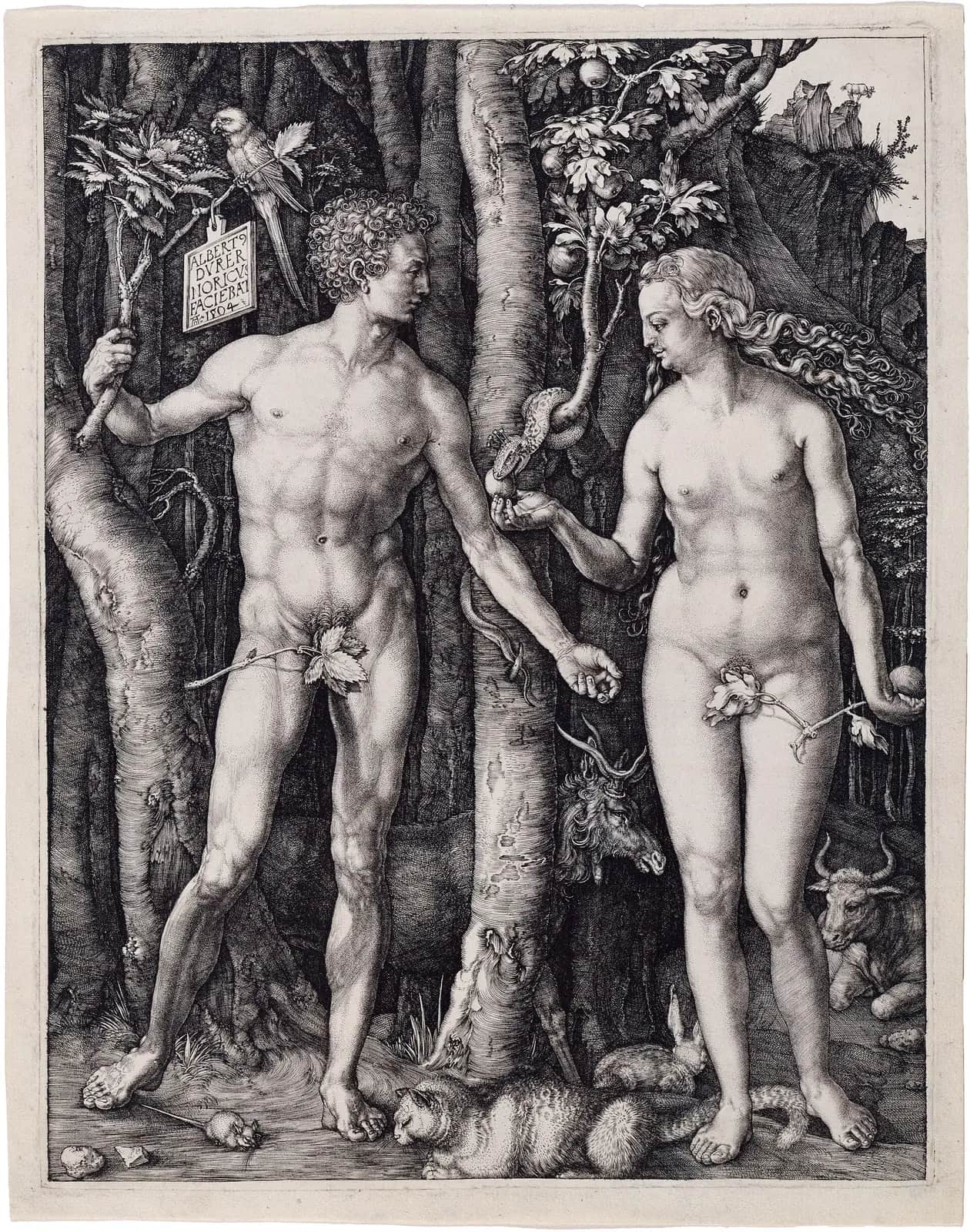
Genesis 3:5 (WEB)
for God knows that in the day you eat it, your eyes will be opened, and you will be like God, knowing good and evil.”
Catechism · 6
Sin
“Like the first sin, it is disobedience, a revolt against God through the will to become "like gods,"” — Catechism footnote: Gen 3:5.
The Fall
“Behind the disobedient choice of our first parents lurks a seductive voice, opposed to God, which makes them fall into death out of envy.” — Catechism footnote: Cf. Gen 3:1-5; Wis 2:24.
“We find a reflection of that rebellion in the tempter's words to our first parents: "You will be like God."” — Catechism footnote: Gen 3:5.
“This is what man's first sin consisted of.” — Catechism footnote: Cf. Gen 3:1-11 ; Rom 5:19.
“Seduced by the devil, he wanted to "be like God", but "without God, before God, and not in accordance with God".” — Catechism footnote: St. Maximus the Confessor, Ambigua: PG 91, 1156C; cf. Gen 3:5.
“They become afraid of the God of whom they have conceived a distorted image - that of a God jealous of his prerogatives.” — Catechism footnote: Cf. Gen 3:5-10.
Fathers and councils · 24
Augustine of Hippo
“For by no other path was it possible for us to return but by humility, who fell by pride, according as it was said to our first creation, “Taste, and ye shall be as gods.”” — editor's note: Gen. iii. 5
Read the whole comment“…pride may not be possessed of the devil, who against Thy commandments advised to pride, saying, “Eat, and your eyes shall be opened, and ye shall be as gods.”” — editor's note: Gen. iii. 5.
Read the whole comment“As he who seduced him, said of himself, “I will sit in the sides of the north;” so he persuaded him, by saying, “Taste, and ye shall be as gods.”” — editor's note: Gen. iii. 5.
Read the whole comment“God is for our Captain, the devil a deserter: the Captain gave a commandment, the deserter suggested guile: where were thine ears between precept and deceit? was the devil better than God?” — editor's note: Gen. ii. 17, iii. 5.
Read the whole comment“For if an angel is able to use air, mist, cloud, fire, and any other natural substance or corporal species; and man to use face, tongue, hand, pen, letters, or any other significants, for the purpose of intimating the secret things of his own mind: in a word, if,…” — editor's note: [Judg. xiii. 20. This mysterious subject may be illustrated from Holy Scripture so as to justify our author’s very broad statement. It throws light on Gen.…
Read the whole comment“For they chose to dwell under a defence of their own, not under that of the Most High: thus they listened to the suggestions of the serpent, and despised the precept of God: and discovered at last that what God threatened, not what the devil promised, had come to pass in them.” — editor's note: Gen. iii. 5.
Read the whole comment“…genus by species when he used this word, that is, to have meant avarice universally and generally by love of money, which is truly the root of all evils.…If therefore our heart be not inclined to covetousness, we fear God only for God’s sake, so that He is the only reward of our serving Him.” — editor's note: Gen. iii. 5.
Read the whole comment“Who even in the case of Job, kept for him his wife, that by her the husband might be, not comforted, but tempted?” — editor's note: Gen. iii. 1–6.
Read the whole comment“So neither could our first parents have been persuaded to sin unless it had been said, “Ye shall be as gods.”” — editor's note: Gen. iii. 5
Read the whole comment“…and the woman did not eat alone, but gave to her husband, and they eat together; although she alone spoke with the serpent, and she alone was led away by him: so also in the case of that hidden and secret kind of wedlock, which is transacted and discerned in a single human being, the carnal, or as I may say, since it…” — editor's note: Gen. iii. 1–6
Read the whole comment“It was this that made him listen with pleasure to the words, “Ye shall be as gods,” which they would much more readily have accomplished by obediently adhering to their supreme and true end than by proudly living to themselves.” — editor's note: Gen. iii. 5.
Read the whole comment“There shall we be still, and know that He is God; that He is that which we ourselves aspired to be when we fell away from Him, and listened to the voice of the seducer, “Ye shall be as gods,” and so abandoned God, who would have made us as gods, not by deserting Him, but by participating in Him.” — editor's note: Gen. iii. 5.
Read the whole comment“For this fallen said to man, envying his standing, “Taste, and ye shall be as gods;” that is, seize to yourselves by usurpation that which ye are not made, for I also have been cast down by robbery.” — editor's note: Gen. iii. 5.
Read the whole comment
Origen
- Origen, Against Celsus VII.39Book VII
“…the serpent saying to the woman, as if she and her husband had been blind, “God knows that on the day that ye eat thereof your eyes shall be opened;” and also when it is said, “They did eat, and the eyes of both of them were opened.”” — editor's note: Gen. iii. 5.
Read the whole comment
Tertullian
“Now, although it here mentions the nostrils, it does not say that they were made by God; so again it speaks of skin and bones, and flesh and eyes, and sweat and blood, in subsequent passages, and yet it never intimated that they had been created by God.” — editor's note: See Gen. ii. 21, 23; iii. 5, 19; iv. 10.
Read the whole comment
John Cassian
- John Cassian, Conferences I–X V.6Conference V
“For it was gluttony through which he took the fruit of the forbidden tree, vainglory through which it was said “Your eyes shall be opened,” and pride through which it was said “Ye shall be as gods, knowing good and evil.”” — editor's note: Gen. iii. 5.
Read the whole comment - John Cassian, Conferences I–X VIII.25Conference VIII
“…of wickedness and so became not only a liar, but also the father of the actual lie, by which when he promised Divinity to man and said “Ye shall be as gods,” he abode not in the truth, but from the beginning became a murderer, both by bringing Adam into a state of mortality, and by slaying Abel by the hand of his…” — editor's note: Gen. iii. 5.
Read the whole comment
John Chrysostom
“For the devil first was the father of a lie, when he said, “In the day that ye eat thereof your eyes shall be opened” ( Gen. iii. 5 ), and he first used it.” — the author cites it
Read the whole comment“That is, as he then slandered God, saying, “In the day ye eat, your eyes shall be opened;”thereby intending to signify, that they were beguiled and overreached, and had received no benefit; even so in this case also he insinuates this same thing,…” — editor's note: Gen. iii. 5.
Read the whole comment
Jerome
“Perchance, mindful of his old trick, he will try to tempt Bonosus with hunger.” — editor's note: Gen. iii. 1–6; Matt. iv. 1–4.
Read the whole comment
Gregory of Nyssa
- Gregory of Nyssa, On the Making of Man On the.21On the Making of Man
“…it says, “that the tree was good for food, and that it was pleasant to the eyes to behold, and fair to see; and she took of the fruit thereof and did eat,” and that eating became the mother of death to men.” — editor's note: Gen. iii. 5, 6 (LXX.).
Read the whole comment
Gregory of Nazianzus
“…man, as she was the more apt to persuade, alas for my weakness! (for that of my first father was mine), he forgot the Commandment which had been given to him; he yielded to the baleful fruit; and for his sin he was banished, at once from the Tree of Life, and from Paradise, and from God; and put on the coats of…” — editor's note: Gen. iii. 5.
Read the whole comment
Hippolytus of Rome
“For thou hast become God: for whatever sufferings thou didst undergo while being a man, these He gave to thee, because thou wast of mortal mould, but whatever it is consistent with God to impart, these God has promised to bestow upon thee, because thou hast been deified, and begotten unto immortality.” — editor's note: [This startling expression is justified by such texts as 2 Pet. i. 4 compared with John xvii. 22, 23, and Rev. iii. 21. Thus, Christ overrules the Tempter…
Read the whole comment
Clement of Alexandria
“Jam vero volunt viri cure uxore in matrimonio consuetudinem, quæ dicta est “cognitio,” esse peccatum: eam quippe indicari ex esu “ligni boni et mali,” per significationem hujus vocabuli “cognovit,” quæ mandati tmnsgressionem notat.” — editor's note: Gen. iii. 5.
Read the whole comment
Cross-references · 37
Cited together in On the Making of Man On the.21.
Cited together in The City of God XXII.30.
Cited together in The City of God XXII.30.
Cited together in Conferences I–X VIII.25.
Cited together in Conferences I–X VIII.25.
Cited together in The City of God XXII.30.
Cited together in Catechism §1850.
Cited together in The City of God XIV.13.
Cited together in The City of God XIV.13.
Cited together in The City of God XXII.30.
Cited together in The City of God XIV.13.
Cited together in Conferences I–X VIII.25.
Cited together in Catechism §391.
Cited together in The City of God XIV.13.
Cited together in On the Holy Trinity XI.5.
Cited together in The City of God XXII.30.
Cited together in Conferences I–X V.6.
Cited together in The City of God XIV.13.
Cited together in Conferences I–X V.6.
Cited together in Catechism §391 and 2 other places.
Cited together in Against Celsus VII.39.
Cited together in The Refutation of All Heresies X.30.
Cited together in On the Holy Trinity XII.12.
Cited together in Catechism §399.
Cited together in Catechism §397.
Cited together in On the Holy Trinity XII.12.
Cited together in Catechism §1850.
Cited together in Catechism §1850.
Cited together in Catechism §1850.
Cited together in On the Making of Man On the.21 and 1 other place.
Cited together in Catechism §392 and 1 other place.
Cited together in Catechism §392.
Cited together in The Refutation of All Heresies X.30.
Cited together in Catechism §391.
Cited together in The City of God XXII.30.
Cited together in Against Hermogenes Chapter 31.
Cited together in Against Hermogenes Chapter 31.