The idea
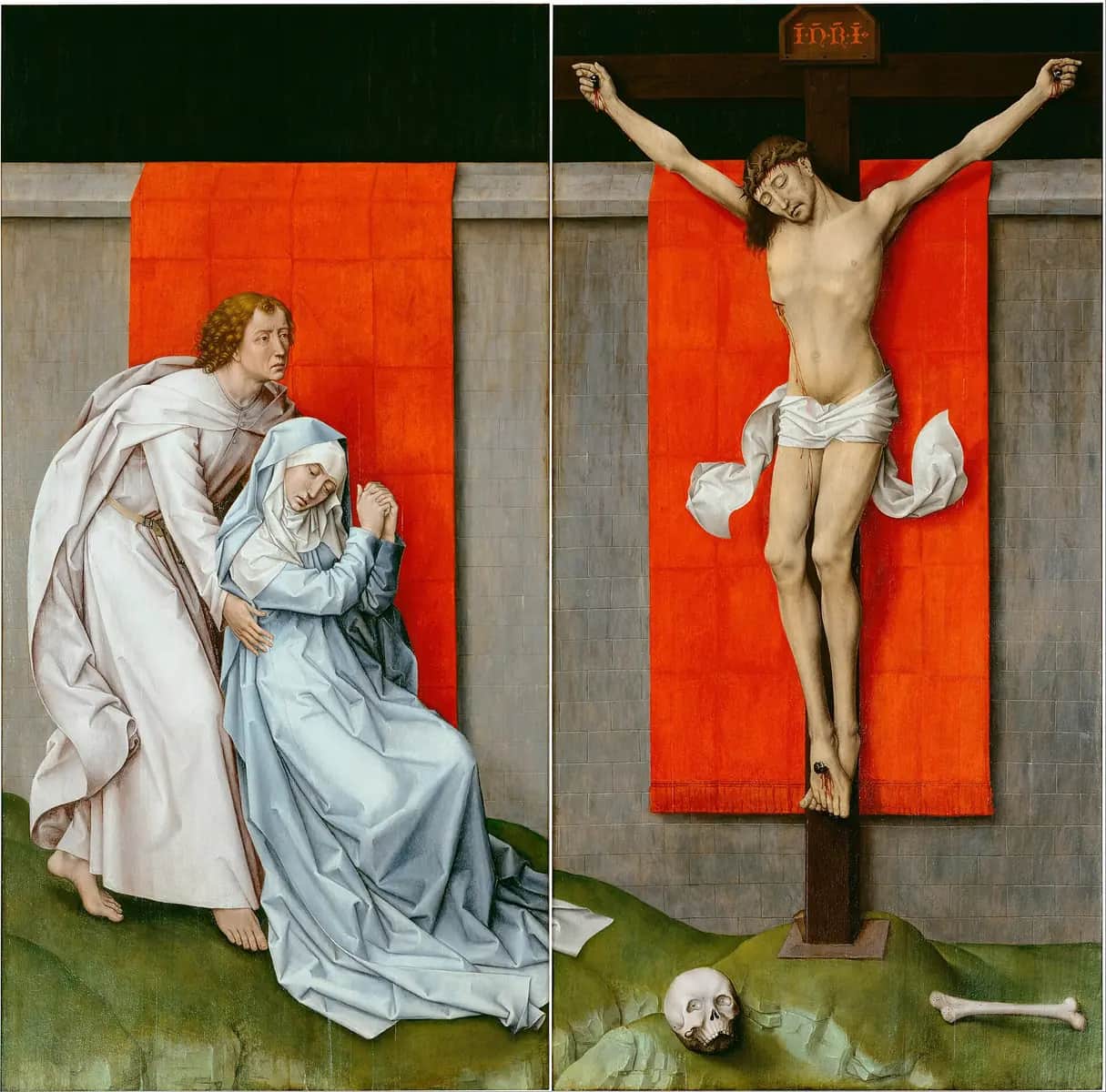
John's Greek isn't 'home' (oikos) but eis ta idia, 'to his own' — as his own mother. Mary is later found with the apostles in Jerusalem awaiting Pentecost (Acts 1:14). And because the beloved disciple is left unnamed, every reader is meant to stand in his place: to each disciple Jesus says, 'Behold, your mother.'
Key verses
- John 19:27 — 'the disciple took her to his own (eis ta idia).'
- John 1:11, Luke 18:28 — the same phrase means one's own people and household, not a house (p 162).
- Acts 1:14, John 13:23 — Mary with the apostles; 'the disciple whom Jesus loved.'
The connection
| Old Testament root | New Testament fulfilment | |
|---|---|---|
| The beloved disciple takes Mary as his own | → | Every Christian invited to do the same |
John says the disciple took Mary 'to his own' (eis ta idia), as his own mother, and she is later found among the apostles. Because the disciple is left unnamed, Pitre argues every reader is meant to stand in his place and receive Mary too.
Sources
- Origen — Commentary on John 1.23 (p 164) · read
- Modern scholars Pitre cites — Raymond Brown and Rudolf Bultmann on the beloved disciple as ideal disciple (p 163)