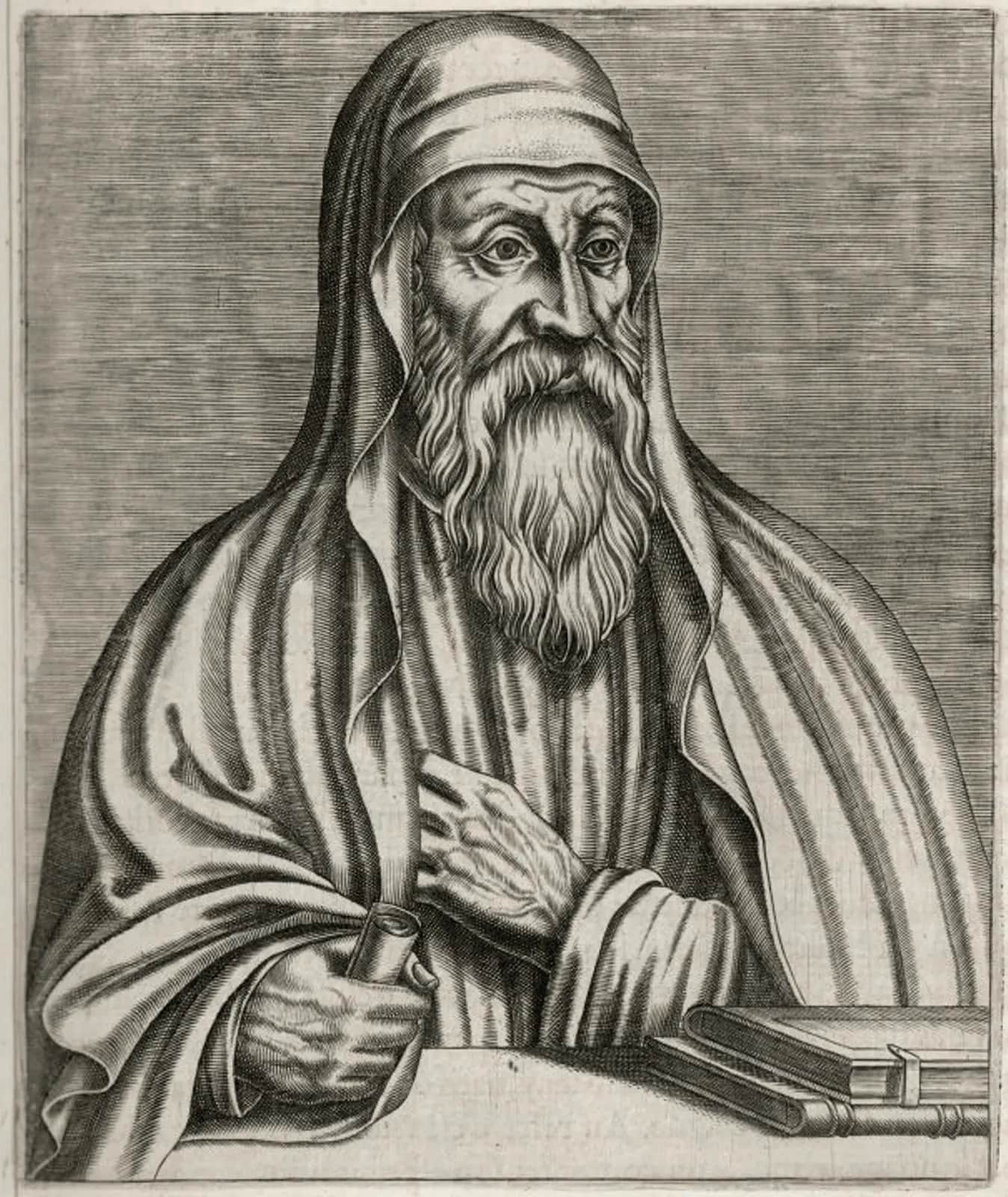
Who
Alexandrian teacher who succeeded Clement, moved to Caesarea in 231 and died after torture in the persecution of Decius; the most learned and prolific writer of the early Church. The Hexapla, On First Principles, Against Celsus and homilies and commentaries on most of Scripture set the pattern for spiritual exegesis, though some of his speculations were condemned in 553. According to Socrates he already used the title Theotokos; his Homilies on Luke treat Mary's faith and the sword of Simeon, and the Commentary on John says no one understands that Gospel who has not, like John, received Mary as his own mother.
Lineage
In the succession →- Taught by
- Clement of Alexandriac. 150–c. 215
Eusebius, Church History VI.6 (Origen succeeded Clement at the school of Alexandria)
- Disciples
- Dionysius of Alexandriad. c. 264
Eusebius, Church History VI.29 (a pupil of Origen, who succeeded Heraclas at the school)
Gregory Thaumaturgusc. 213–270Gregory Thaumaturgus, Panegyric on Origen; Eusebius, Church History VI.30
Contents
In Jewish Roots of Mary
Who
The great biblical scholar of Alexandria and Caesarea. His commentary on John contains the oldest surviving interpretation of Jesus' words from the cross to Mary and the beloved disciple.
Quoted works
- Commentary on John 1.4 — 'There is no child of Mary except Jesus, according to the opinion of those who think correctly about her' (p 113)
- Commentary on John 1.23 — no one can understand John's Gospel 'who has not leaned on Jesus' breast nor received Mary from Jesus to be his mother also' (p 164)
Quoted in
Book I · Book II · Book III · Book IV · Book V · …
Matthew 1:18 · Matthew 1:19 · Matthew 16:13–19 · Matthew 16:20–21 · Matthew 16:22–23 · …
John 1:1 · John 1:2 · John 1:3 · John 1:4 · John 1:5 · …
Luke 1:1–4 · Luke 1:11–14 · Luke 1:15–17 · Luke 1:23–25 · Luke 1:26–27 · …
Book I · Book II · Book III · Book IV · …
Mark 1:14–15 · Mark 10:13–16 · Mark 10:17–27 · Mark 10:46–52 · Mark 14:3–9 · …
A Letter from Origen to Africanus
Chapter 1