The idea
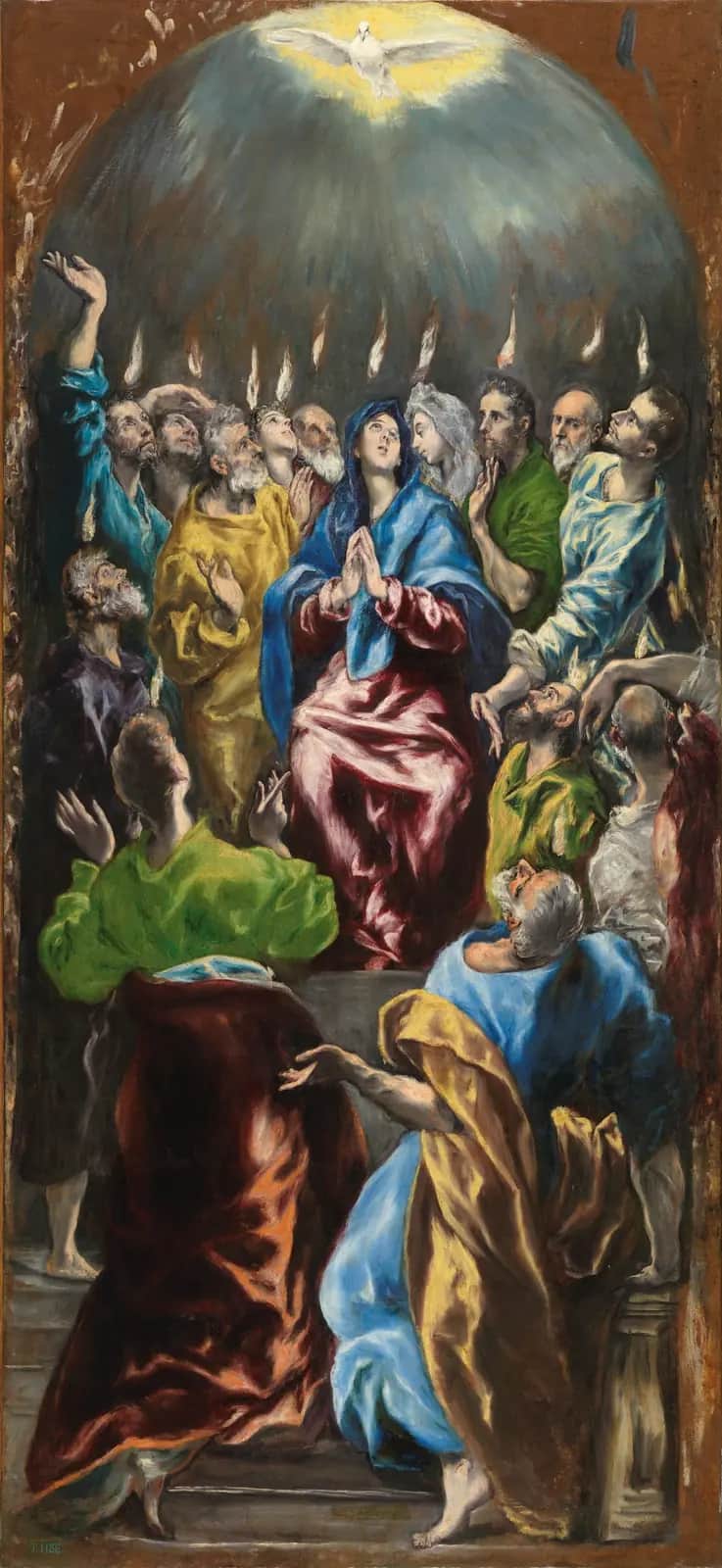
Our bond to Mary is not by blood but through Jesus' passion: we are children of the birth pangs she bore at the cross. Revelation names 'the rest of her offspring' — those who keep God's commandments — as her children. This is the 'Mother of the Church' section of the New Rachel chapter (pp 155–159): as Rachel was the matriarch of Israel, Mary the new Rachel is the matriarch of the Church; Ambrose hears Christ say to each of us, 'There is your mother'; John Paul II describes the Church's birth as the fruit of her labour pains at Calvary (John 11:52); and Lumen Gentium 62 teaches that, taken up into heaven, she 'continues to bring us the gifts of eternal salvation' by her intercession. The Jewish scholar Jacob Neusner closes the case: 'if Rachel, then why not Mary?'
Key verses
- Revelation 12:17 — the dragon wars on 'the rest of her offspring… who keep the commandments.'
- John 16:20, John 1:12 — born of her travail; 'children of God.'
- John 11:52 — Jesus dies 'to gather together in one the children of God' — the Church's birth (John Paul II).
The connection
| Old Testament root | New Testament fulfilment | |
|---|---|---|
| The Woman's offspring (Rev 12:17) | → | The Church as Mary's children |
Our bond to Mary comes not through blood but through Jesus' passion — we are children of the pangs she bore at the cross. Revelation names 'the rest of her offspring,' those who keep God's commandments, as her children: the Church.
Sources
- Ambrose of Milan — On Luke 7.5 (p 155) · read
- John Paul II — General Audience, 17 September 1997 (p 156) · read
- Lumen Gentium (Vatican II, 1964) — §62 (pp 158–159) · read
- Sub tuum praesidium — the third-century prayer (p 157) · read
- Modern scholars Pitre cites — David Flusser and Jacob Neusner (pp 157–159)