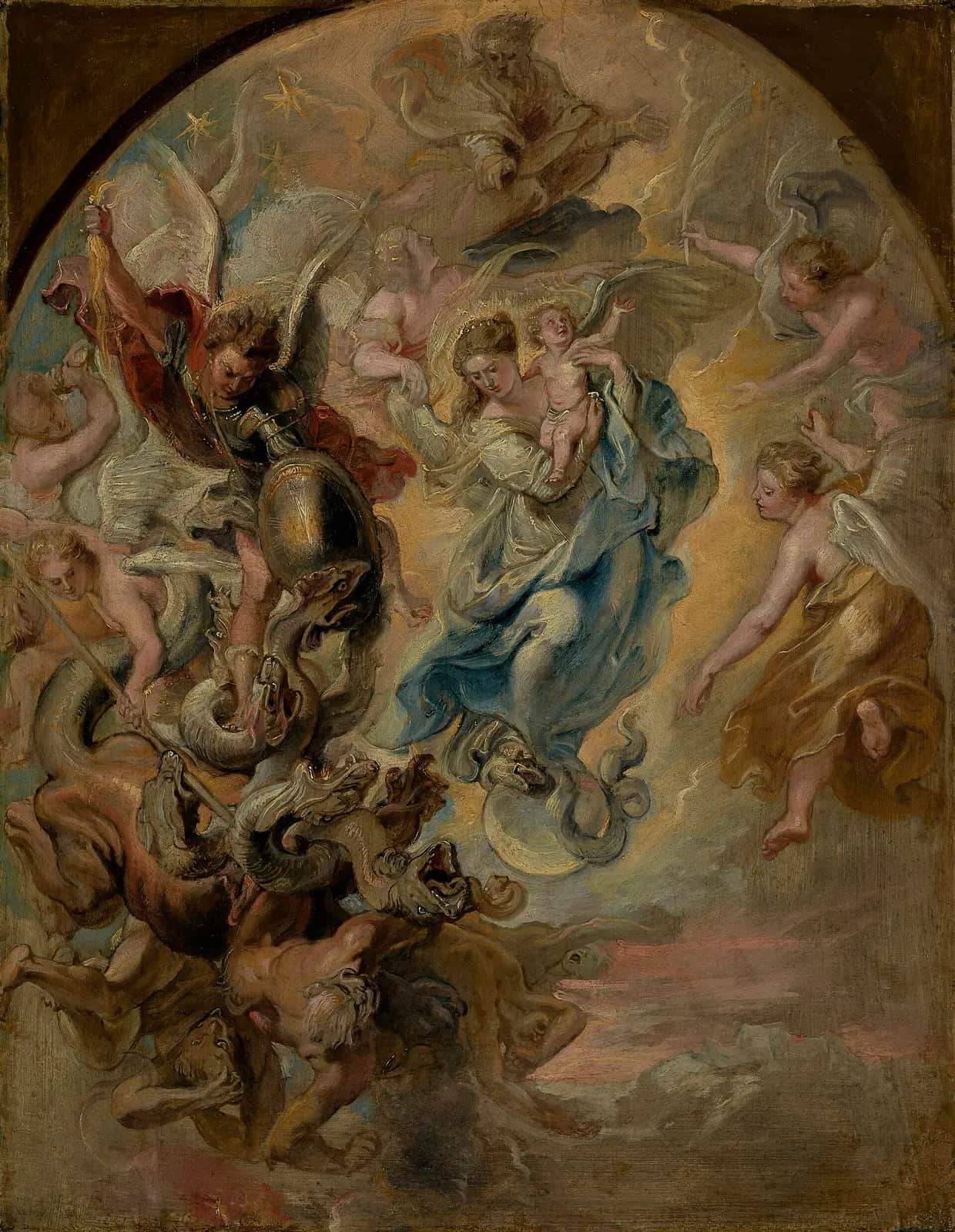
The idea
A crown in antiquity was 'one of the symbols of royal identity and authority,' and this one is of twelve stars, 'which clearly symbolize the twelve tribes of Israel' (Genesis 37:9–10): the Woman is 'the queen of the people of God,' her crown 'a share in Christ's kingship.' Pitre's table sets Isaiah 7:13–14 against Revelation 12:1–2, 5 — a sign in the height / in heaven; the virgin with child / the woman with child; she will bear a son / she bore a son — 'even clearer in Greek.' Three consequences: the Woman is an individual (only one virgin conceived the Messiah); John of Patmos read Isaiah 7 messianically as Matthew did; and the mother of Immanuel is the royal queen mother. Finally, the Woman stands 'in heaven' as her Son is 'caught up' to the throne: 'Just as Jesus is a heavenly king… so Mary, Jesus' mother, is a heavenly queen' — 'the queen of the cosmos,' in a Protestant scholar's phrase.
Key verses
- Revelation 12:1 — the crown of twelve stars.
- Genesis 37:9 — sun, moon and eleven stars — the tribes.
- Isaiah 7:14 — the sign of the virgin with child.
- Revelation 12:5 — the Son caught up to God's throne.
The connection
| Old Testament root | New Testament fulfilment | |
|---|---|---|
| Isaiah's sign: the virgin with child bears a son | → | John's sign: the Woman with child bears a son — and reigns in heaven |
'Queen of Heaven,' properly understood, is simply what follows from a heavenly King: the mother of a Son enthroned in heaven is the queen mother of heaven.
Sources
- Modern scholars Pitre cites — Craig Koester (p 81)