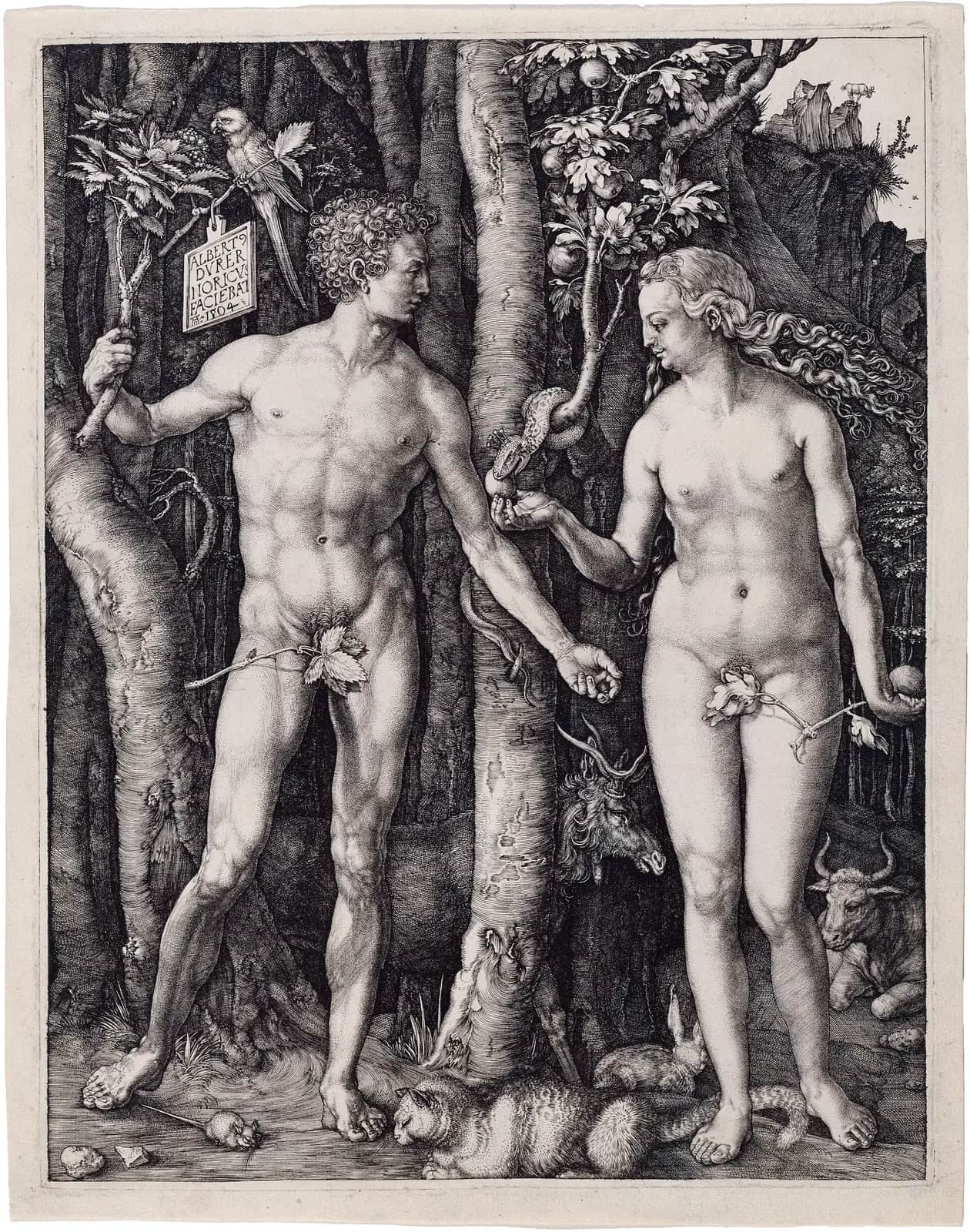
The idea
Pitre lays the two women side by side: (1) each is called 'woman' — Eve eleven times in Genesis, Mary twice in John; (2) each draws the man to an act — Eve to the first sin, Mary to Jesus' first sign; (3) each stands beside him at the decisive moment — Eve with Adam at the Fall, Mary with Jesus at the crucifixion; (4) each is bound to the 'offspring' who defeats the serpent. And it is at the cross, the very hour the devil is 'cast out,' that Jesus calls her 'Woman' again.
Key verses
- Genesis 3:1, Genesis 3:6 — Eve with Adam ('with her') at the Fall; her seed will bruise the serpent.
- John 2:1 — Cana: Mary, the 'Woman,' prompts Jesus' first sign.
- John 19:25 — the cross: Mary, the 'Woman,' stands by as her Son dies.
- John 12:31 — 'now shall the prince of this world be cast out' — the devil defeated.
The connection
| Old Testament root | New Testament fulfilment | |
|---|---|---|
| Eve — named 'woman,' tempter, at the Fall, mother of the seed | → | Mary — named 'Woman,' at Cana and the cross, mother of the victor |
This four-fold match is Pitre's cumulative case that John's own Gospel presents Mary as the New Eve: she is not merely like Eve at one point but parallels her at four — and the parallel completes exactly where Genesis 3:15 is fulfilled, at the cross, where the serpent is crushed.