The idea
Pitre chooses patristic witnesses who name their biblical grounds — the same three texts he used. Athanasius on the cross: 'If she had had other children, the Savior would not have ignored them and entrusted his Mother to someone else.' Chrysostom on 'until': it 'need not lead you to believe that Joseph knew her subsequently.' Augustine on Luke 1:34: 'she certainly would not have responded in such a way if she had not already made a vow of virginity.' Origen and Basil show the belief was a mark of orthodoxy. When the Roman writer Helvidius claimed the 'brothers' were Mary's children, Jerome answered: 'We believe that God was born of a Virgin, because we read it. That Mary was married after she brought forth, we do not believe, because we do not read it.' At the Second Council of Constantinople (553) Mary was titled Ever-Virgin, Aeiparthenos.
Key verses
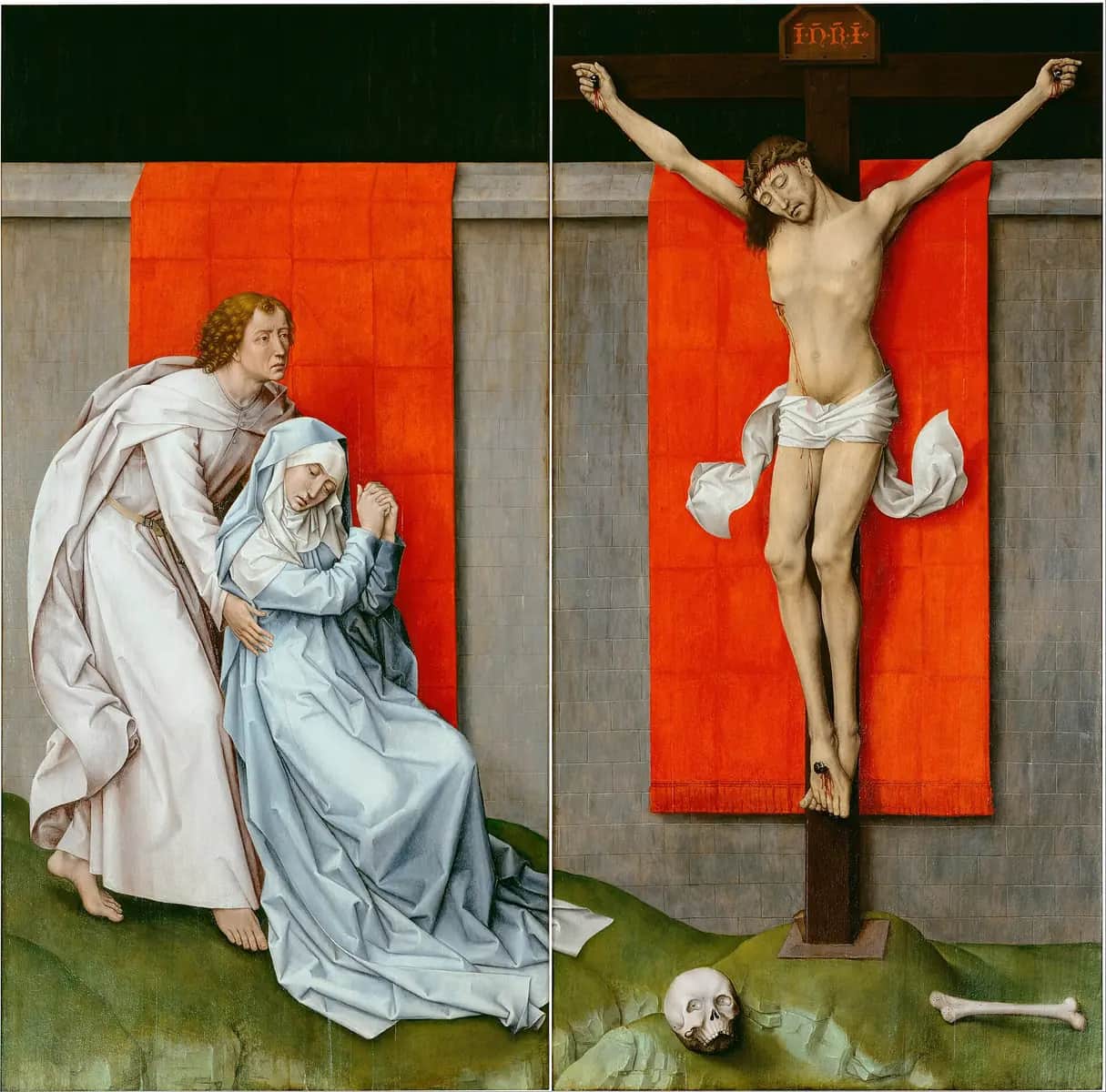
- John 19:26 — Athanasius' text.
- Matthew 1:25 — Chrysostom's text.
- Luke 1:34 — Augustine's text.
The connection
| Old Testament root | New Testament fulfilment | |
|---|---|---|
| Three New Testament texts | → | Three Fathers, East and West, Greek and Latin, reading them the same way |
The perpetual virginity was held on biblical grounds from the start, across both halves of the Church, and defended — when it was first denied — by the greatest biblical scholar of the age.
Sources
- Athanasius of Alexandria — On Virginity (p 113) · read
- John Chrysostom — Homily on Matthew 5.2 (p 113) · read
- Augustine of Hippo — On Holy Virginity 4.4 (p 113) · read
- Origen — Commentary on John 1.4 (p 113) · read
- Basil the Great — Homily on the Holy Nativity of Christ 5 (p 113) · read
- Jerome — Against Helvidius 21 (p 114) · read · read
- Second Council of Constantinople (553) (p 114) · read
- Epiphanius of Salamis — Panarion 78.6.1 (p 114) · read