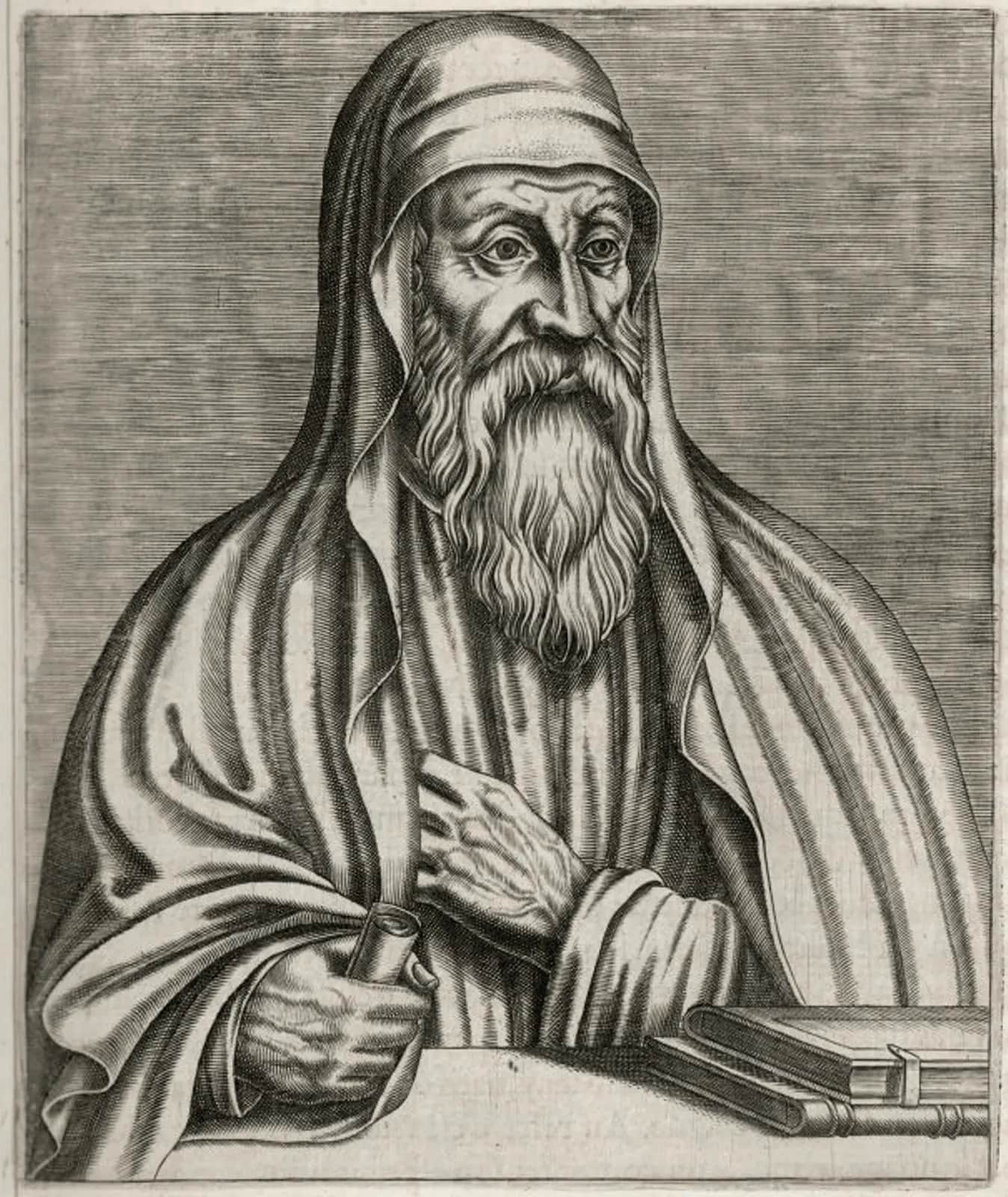
Origen · Against Celsus · Book IV
Passages · 99
Book IV
- Against Celsus IV.1 — Having, in the three preceding books, fully stated what occurred to us by way of answer to the treatise of Celsus, we now, reverend Ambrosius, with prayer to God through Christ, offer this fourth book as a reply to…vatican.va
- Against Celsus IV.2 — “But that certain Christians and (all) Jews should maintain, the former that there has already descended, the latter that there will descend, upon the earth a certain God, or Son of a God, who will make the…vatican.va
- Against Celsus IV.3 — And he continues: “What is the meaning of such a descent upon the part of God?” not observing that, according to our teaching, the meaning of the descent is pre-eminently to convert what are called in the Gospel the…vatican.va
- Against Celsus IV.4 — The argument which Celsus employs against us and the Jews will be turned against himself thus: My good sir, does the God who is over all things know what takes place among men, or does He not know? Now if you admit…vatican.va
- Against Celsus IV.5 — The illustrious Celsus, taking occasion I know not from what, next raises an additional objection against us, as if we asserted that “God Himself will come down to men.” He imagines also that it follows from this,…vatican.va
- Against Celsus IV.6 — But if you will have us to meet the most ridiculous among the charges of Celsus, listen to him when he says: “Now God, being unknown amongst men, and deeming himself on that account to have less than his due, would…vatican.va
- Against Celsus IV.7 — I do not know how it is, that after the foolish remarks which he has made upon the subject which we have just been discussing, he should add the following, that “God does not desire to make himself known for his own…vatican.va
- Against Celsus IV.8 — And it is not matter of surprise that in certain generations there have existed prophets who, in the reception of divine influence, surpassed, by means of their stronger and more powerful (religious) life, other…vatican.va
- Against Celsus IV.9 — There came, then, although Celsus may not wish to admit it, after the numerous prophets who were the reformers of that well-known Israel, the Christ, the Reformer of the whole world, who did not need to employ…vatican.va
- Against Celsus IV.10 — In the next place, Celsus, as is his custom, having neither proved nor established anything, proceeds to say, as if we talked of God in a manner that was neither holy nor pious, that “it is perfectly manifest that…vatican.va
- Against Celsus IV.11 — After this, being desirous to show that it is nothing either wonderful or new which we state regarding floods or conflagrations, but that, from misunderstanding the accounts of these things which are current among…vatican.va
- Against Celsus IV.12 — Whether, then, there are cycles of time, and floods, or conflagrations which occur periodically or not, and whether the Scripture is aware of this, not only in many passages, but especially where Solomon says, “What…vatican.va
- Against Celsus IV.13 — But as it is in mockery that Celsus says we speak of “God coming down like a torturer bearing fire,” and thus compels us unseasonably to investigate words of deeper meaning, we shall make a few remarks, sufficient to…vatican.va
- Against Celsus IV.14 — But let us look at what Celsus next with great ostentation announces in the following fashion: “And again,” he says, “let us resume the subject from the beginning, with a larger array of proofs. And I make no new…vatican.va
- Against Celsus IV.15 — And with respect to His having descended among men, He was “previously in the form of God;” and through benevolence, divested Himself (of His glory), that He might be capable of being received by men. But He did not,…vatican.va
- Against Celsus IV.16 — For there are different appearances, as it were, of the Word, according as He shows Himself to each one of those who come to His doctrine; and this in a manner corresponding to the condition of him who is just…vatican.va
- Against Celsus IV.17 — But will not those narratives, especially when they are understood in their proper sense, appear far more worthy of respect than the story that Dionysus was deceived by the Titans, and expelled from the throne of…vatican.va
- Against Celsus IV.18 — But Celsus, lingering over matters which he does not understand, leads us to be guilty of tautology, as we do not wish even in appearance to leave any one of his objections unexamined. He proceeds, accordingly, as…vatican.va
- Against Celsus IV.19 — Others, then, may concede to Celsus that God does not undergo a change, but leads the spectators to imagine that He does; whereas we who are persuaded that the advent of Jesus among men was no mere appearance, but a…vatican.va
- Against Celsus IV.20 — In the next place, as he represents the Jews accounting in a way peculiar to themselves for their belief that the advent of Christ among them is still in the future, and the Christians as maintaining in their way…vatican.va
- Against Celsus IV.21 — But I do not understand how he can imagine the overturning of the tower (of Babel) to have happened with a similar object to that of the deluge, which effected a purification of the earth, according to the accounts…vatican.va
- Against Celsus IV.22 — But, according to Celsus, “the Christians, making certain additional statements to those of the Jews, assert that the Son of God has been already sent on account of the sins of the Jews; and that the Jews having…vatican.va
- Against Celsus IV.23 — In the next place, ridiculing after his usual style the race of Jews and Christians, he compares them all “to a flight of bats or to a swarm of ants issuing out of their nest, or to frogs holding council in a marsh,…vatican.va
- Against Celsus IV.24 — In reply to these, we ask of those who accept such aspersions as are scattered against us, Do you regard all men as a collection of bats, or as frogs, or as worms, in consequence of the pre-eminence of God or do you…vatican.va
- Against Celsus IV.25 — But if you depreciate the littleness of man, not on account of his body, but of his soul, regarding it as inferior to that of other rational beings, and especially of those who are virtuous; and inferior, because…vatican.va
- Against Celsus IV.26 — But if it is on account of those opinions of the Christians and Jews which displease Celsus (and which he does not at all appear to understand) that they are to be regarded as worms and ants, and the rest of mankind…vatican.va
- Against Celsus IV.27 — And I have not yet spoken of the other evils which prevail amongst men, from which even those who have the appearance of philosophers are not speedily freed, for in philosophy there are many pretenders. Nor do I say…vatican.va
- Against Celsus IV.28 — But since he has represented those whom he regards as worms, viz., the Christians, as saying that “God, having abandoned the heavenly regions, and despising this great earth, takes up His abode amongst us alone, and…vatican.va
- Against Celsus IV.29 — But Celsus perhaps has misunderstood certain of those whom he has termed “worms,” when they affirm that “God exists, and that we are next to Him.” And he acts like those who would find fault with an entire sect of…vatican.va
- Against Celsus IV.30 — It appears to me that Celsus has also misunderstood this statement, “Let Us make man in Our image and likeness;” and has therefore represented the “worms” as saying that, being created by God, we altogether resemble…vatican.va
- Against Celsus IV.31 — After this, wishing to prove that there is no difference between Jews and Christians, and those animals previously enumerated by him, he asserts that the Jews were “fugitives from Egypt, who never performed anything…vatican.va
- Against Celsus IV.32 — But since nothing belonging to human nature is permanent, this polity also must gradually be corrupted and changed. And Providence, having remodelled their venerable system where it needed to be changed, so as to…vatican.va
- Against Celsus IV.33 — Immediately after this, Celsus, assailing the contents of the first book of Moses, which is entitled “Genesis,” asserts that “the Jews accordingly endeavoured to derive their origin from the first race of jugglers…vatican.va
- Against Celsus IV.34 — For we inquire of all those who employ such invocations of God, saying: Tell us, friends, who was Abraham, and what sort of person was Isaac, and what power did Jacob possess, that the appellation “God,” when joined…vatican.va
- Against Celsus IV.35 — And let any one who peruses the treatise of Celsus observe whether it does not convey some such insinuation as the above, when he says: “And they attempted to derive their origin from the first race of jugglers and…vatican.va
- Against Celsus IV.36 — Celsus in the next place, producing from history other than that of the divine record, those passages which bear upon the claims to great antiquity put forth by many nations, as the Athenians, and Egyptians, and…vatican.va
- Against Celsus IV.37 — He charges us, moreover, with introducing “a man formed by the hands of God,” although the book of Genesis has made no mention of the “hands” of God, either when relating the creation or the “fashioning” of the man;…vatican.va
- Against Celsus IV.38 — In the next place, as it is his object to slander our Scriptures, he ridicules the following statement: “And God caused a deep sleep to fall upon Adam, and he slept: and He took one of his ribs, and closed up the…vatican.va
- Against Celsus IV.39 — But as Celsus makes a jest also of the serpent, as counteracting the injunctions given by God to the man, taking the narrative to be an old wife’s fable, and has purposely neither mentioned the paradise of God, nor…vatican.va
- Against Celsus IV.40 — But as he asserts that “the Mosaic narrative most impiously represents God as in a state of weakness from the very commencement (of things), and as unable to gain over (to obedience) even one single man whom He…vatican.va
- Against Celsus IV.41 — After this he continues as follows: “They speak, in the next place, of a deluge, and of a monstrous ark, having within it all things, and of a dove and a crow as messengers, falsifying and recklessly altering the…vatican.va
- Against Celsus IV.42 — In order to show that he had read the book of Genesis, Celsus rejects the story of the dove, although unable to adduce any reason which might prove it to be a fiction. In the next place, as his habit is, in order to…vatican.va
- Against Celsus IV.43 — “Altogether absurd, and out of season,” he continues, “is the (account of the) begetting of children,” where, although he has mentioned no names, it is evident that he is referring to the history of Abraham and…vatican.va
- Against Celsus IV.44 — And erring widely from the meaning of Scripture, he says that “God gave wells also to the righteous.” Now he did not observe that the righteous do not construct cisterns, but dig wells, seeking to discover the…vatican.va
- Against Celsus IV.45 — And whereas Celsus ought to have recognised the love of truth displayed by the writers of sacred Scripture, who have not concealed even what is to their discredit, and thus been led to accept the other and more…vatican.va
- Against Celsus IV.46 — Celsus, moreover, sneers at the “hatred” of Esau (to which, I suppose, he refers) against Jacob, although he was a man who, according to the Scriptures, is acknowledged to have been wicked; and not clearly stating…vatican.va
- Against Celsus IV.47 — Celsus next, for form’s sake, and with great want of precision, speaks of “the dreams of the chief butler and chief baker, and of Pharaoh, and of the explanation of them, in consequence of which Joseph was taken out…vatican.va
- Against Celsus IV.48 — In the next place, as if he had devoted himself solely to the manifestation of his hatred and dislike of the Jewish and Christian doctrine, he says: “The more modest of Jewish and Christian writers give all these…vatican.va
- Against Celsus IV.49 — If Celsus had read the Scriptures in an impartial spirit, he would not have said that “our writings are incapable of admitting an allegorical meaning.” For from the prophetic Scriptures, in which historical events…vatican.va
- Against Celsus IV.50 — Moreover, if the law of Moses had contained nothing which was to be understood as having a secret meaning, the prophet would not have said in his prayer to God, “Open Thou mine eyes, and I will behold wondrous things…vatican.va
- Against Celsus IV.51 — Celsus appears to me to have heard that there are treatises in existence which contain allegorical explanations of the law of Moses. These however, he could not have read; for if he had he would not have said: “The…vatican.va
- Against Celsus IV.52 — After this, selecting from all the treatises which contain allegorical explanations and interpretations, expressed in a language and style not to be despised, the least important, such as might contribute, indeed, to…vatican.va
- Against Celsus IV.53 — I do not know, indeed, how he could conjoin things that do not admit of union, and which cannot exist together at the same time in human nature, in saying, as he did, that “the above treatise deserved to be treated…vatican.va
- Against Celsus IV.54 — But as in the words which I quoted from Celsus, which are a paraphrase from the Timæus, certain expressions occur, such as, “God made nothing mortal, but immortal things alone, while mortal things are the works of…vatican.va
- Against Celsus IV.55 — But I maintain that, if he had the patience (to use his own expression) to listen to the writings of Moses and the prophets, he would have had his attention arrested by the circumstance that the expression “God made”…vatican.va
- Against Celsus IV.56 — Moreover, since Celsus asserts that “the soul is the work of God, but that the nature of body is different; and that in this respect there is no difference between the body of a bat, or of a worm, or of a frog, and…vatican.va
- Against Celsus IV.57 — See, then, whether we ought to yield to one who, holding such opinions, calumniates the Christians, and thus abandon a doctrine which explains the difference existing among bodies as due to the different qualities,…vatican.va
- Against Celsus IV.58 — But we have something more to say to Celsus, when he declares that “the soul is the work of God, and that the nature of body is different,” and puts forward such an opinion not only without proof, but even without…vatican.va
- Against Celsus IV.59 — For it would, indeed, be absurd that certain stones and buildings should be regarded as more sacred or more profane than others, according as they were constructed for the honour of God, or for the reception of…vatican.va
- Against Celsus IV.60 — He next proceeds to say, that “a common nature pervades all the previously mentioned bodies, and one which goes and returns the same amid recurring changes.” In answer to this it is evident from what has been already…vatican.va
- Against Celsus IV.61 — He maintains, moreover, that “no product of matter is immortal.” Now, in answer to this it may be said, that if no product of matter is immortal, then either the whole world is immortal, and thus not a product of…vatican.va
- Against Celsus IV.62 — After these matters, then, he thinks that he can make us acquainted in a few words with the questions regarding the nature of evil, which have been variously discussed in many important treatises, and which have…vatican.va
- Against Celsus IV.63 — I do not understand how Celsus, while admitting the existence of Providence, at least so far as appears from the language of this book, can say that there never existed (at any time) either more or fewer evils, but,…vatican.va
- Against Celsus IV.64 — And now, after these arguments, and others of a similar kind, how can Celsus escape appearing in a ridiculous light, when he imagines that there never has been in the past, nor will be in the future, a greater or…vatican.va
- Against Celsus IV.65 — After this Celsus continues: “It is not easy, indeed, for one who is not a philosopher to ascertain the origin of evils, though it is sufficient for the multitude to say that they do not proceed from God, but cleave…vatican.va
- Against Celsus IV.66 — Celsus in the next place, as if he were able to tell certain secrets regarding the origin of evils, but chose rather to keep silence, and say only what was suitable to the multitude, continues as follows: “It is…vatican.va
- Against Celsus IV.67 — I do not understand how Celsus should deem it of advantage, in writing a treatise against us, to adopt an opinion which requires at least much plausible reasoning to make it appear, as far as he can do so, that “the…vatican.va
- Against Celsus IV.68 — Celsus, however, says that it is only “the course of mortal things which, according to the appointed cycles, must always be the same in the past, present, and future;” whereas the majority of the Stoics maintain that…vatican.va
- Against Celsus IV.69 — He continues to say that “neither have visible things been given to man (by God), but each individual thing comes into existence and perishes for the sake of the safety of the whole passing agreeably to the change,…vatican.va
- Against Celsus IV.70 — Celsus has made a statement regarding evils of the following nature, viz., that “although a thing may seem to you to be evil, it is by no means certain that it is so; for you do not know what is of advantage to…vatican.va
- Against Celsus IV.71 — But as, in what follows, Celsus, not understanding that the language of Scripture regarding God is adapted to an anthropopathic point of view, ridicules those passages which speak of words of anger addressed to the…vatican.va
- Against Celsus IV.72 — We speak, indeed, of the “wrath” of God. We do not, however, assert that it indicates any “passion” on His part, but that it is something which is assumed in order to discipline by stern means those sinners who have…vatican.va
- Against Celsus IV.73 — And as a sequel to his non-understanding of the statements regarding the “wrath” of God, he continues: “Is it not ridiculous to suppose that, whereas a man, who became angry with the Jews, slew them all from the…vatican.va
- Against Celsus IV.74 — He next, in many words, blames us for asserting that God made all things for the sake of man. Because from the history of animals, and from the sagacity manifested by them, he would show that all things came into…vatican.va
- Against Celsus IV.75 — For, in the first place, he is of opinion that “thunders, and lightnings, and rains are not the works of God,”—thus showing more clearly at last his Epicurean leanings; and in the second place, that “even if one were…vatican.va
- Against Celsus IV.76 — After this, Celsus, desirous of maintaining that Providence created the products of the earth, not more on our account than on that of the most savage animals, thus proceeds: “We indeed by labour and suffering earn a…vatican.va
- Against Celsus IV.77 — In the next place, forgetting that his object is to accuse both Jews and Christians, he quotes against himself an iambic verse of Euripides, which is opposed to his view, and, joining issue with the words, charges…vatican.va
- Against Celsus IV.78 — He next proceeds further to object against himself what is said on behalf of man, viz., that the irrational animals were created on his account, saying: “If one were to call us the lords of the animal creation…vatican.va
- Against Celsus IV.79 — In the next place, in answer to the human race, who perceive their own superiority, which far exceeds that of the irrational animals, he says: “With respect to your assertion, that God gave you the power to capture…vatican.va
- Against Celsus IV.80 — Those holy Scriptures, moreover, which bear the name of Moses, introduce the first men as hearing divine voices and oracles, and beholding sometimes the angels of God coming to visit them. For it was probable that in…vatican.va
- Against Celsus IV.81 — Our noble opponent, however, not observing how many philosophers there are who admit the existence of Providence, and who hold that Providence created all things for the sake of rational beings, overturns as far as…vatican.va
- Against Celsus IV.82 — Perhaps also the so-called wars among the bees convey instruction as to the manner in which wars, if ever there arise a necessity for them, should be waged in a just and orderly way among men. But the bees have no…vatican.va
- Against Celsus IV.83 — After Celsus has finished speaking of the bees, in order to depreciate (as far as he can) the cities, and constitutions, and governments, and sovereignties not only of us Christians, but of all mankind, as well as…vatican.va
- Against Celsus IV.84 — And since he asserts that, “when ants die, the survivors set apart a special place (for their interment), and that their ancestral sepulchres such a place is,” we have to answer, that the greater the laudations which…vatican.va
- Against Celsus IV.85 — He is not ashamed, moreover, to say, in addition to these statements (that the unseemly character of his opinions may be manifest to those who will live after him): “Come now, if one were to look down from heaven…vatican.va
- Against Celsus IV.86 — Immediately after this, as if doing his utmost to reduce the human race to a still lower position, and to bring them to the level of the irrational animals, and desiring to omit not a single circumstance related of…vatican.va
- Against Celsus IV.87 — Let it be granted, however, that there are other prophylactics against poisons known to animals: what does that avail to prove that it is not nature, but reason, which leads to the discovery of such things among…vatican.va
- Against Celsus IV.88 — And wishing to show at greater length that even the thoughts of God entertained by the human race are not superior to those of all other mortal creatures, but that certain of the irrational animals are capable of…vatican.va
- Against Celsus IV.89 — Celsus, however, seeing he wished to prove by the foregoing statements that the irrational animals are more divine and intelligent than human beings, ought to have established at greater length the actual existence…vatican.va
- Against Celsus IV.90 — But we have a few remarks to make, out of a larger number, in answer to these statements of Celsus, that we may show the ingratitude towards his Maker which is involved in his holding these false opinions. For…vatican.va
- Against Celsus IV.91 — But besides, if birds of augury converse with one another, as Celsus maintains they do, the prophetic birds having a divine nature, and the other rational animals also ideas of the divinity and foreknowledge of…vatican.va
- Against Celsus IV.92 — In my opinion, however, it is certain wicked demons, and, so to speak, of the race of Titans or Giants, who have been guilty of impiety towards the true God, and towards the angels in heaven, and who have fallen from…vatican.va
- Against Celsus IV.93 — For which reason, whatever else there may be in the writings of Moses which excites my wonder, I would say that the following is worthy of admiration, viz., that Moses, having observed the varying natures of animals,…vatican.va
- Against Celsus IV.94 — But if the soul of birds is to be esteemed divine because future events are predicted by them, why should we not rather maintain, that when omens are accepted by men, the souls of those are divine through which the…vatican.va
- Against Celsus IV.95 — The true God, however, neither employs irrational animals, nor any individuals whom chance may offer, to convey a knowledge of the future; but, on the contrary, the most pure and holy of human souls, whom He inspires…vatican.va
- Against Celsus IV.96 — We ought to take note, however, that the power of foreknowing the future is by no means a proof of divinity; for in itself it is a thing indifferent, and is found occurring amongst both good and bad. Physicians, at…vatican.va
- Against Celsus IV.97 — How impious, indeed, is the assertion of this man, who charges us with impiety, that “not only are the irrational animals wiser than the human race, but that they are more beloved by God (than they)!” And who would…vatican.va
- Against Celsus IV.98 — I do not know, moreover, how Celsus could hear of the elephants’ (fidelity to) oaths, and of their great devotedness to our God, and of the knowledge which they possess of Him. For I know many wonderful things which…vatican.va
- Against Celsus IV.99 — In addition to all that he has already said, Celsus subjoins the following: “All things, accordingly, were not made for man, any more than they were made for lions, or eagles, or dolphins, but that this world, as…vatican.va
Scripture cited · 137 verses
Genesis 1:26 · Genesis 1:27 · Genesis 2:7 · Genesis 2:21 · Genesis 2:22 · Genesis 2:24 · Genesis 4:8 · Genesis 11:4 · Genesis 19:17 · Genesis 26:15 · Genesis 27:41 · Genesis 30:42 · Genesis 30:43 · Exodus 24:2 · Leviticus 19:26 · Numbers 6:24 · Numbers 23:23 · Deuteronomy 1:31 · Deuteronomy 4:16 · Deuteronomy 4:17 · Deuteronomy 4:18 · Deuteronomy 4:19 · Deuteronomy 4:24 · Deuteronomy 9:3 · Deuteronomy 18:12 · Deuteronomy 18:14 · Deuteronomy 18:15 · Deuteronomy 25:4 · Deuteronomy 32:8 · Deuteronomy 32:9 · Job 10:8 · Psalm 2:8 · Psalm 6:1 · Psalm 33:5 · Psalm 37:8 · Psalm 44:23 · Psalm 49:12 · Psalm 78:1 · Psalm 78:2 · Psalm 78:3 · Psalm 78:65 · Psalm 82:1 · Psalm 96:5 · Psalm 102:26 · Psalm 102:27 · Psalm 104:14 · Psalm 104:15 · Psalm 119:18 · Psalm 119:73 · Proverbs 4:23 · Proverbs 5:15 · Proverbs 5:16 · Proverbs 5:17 · Proverbs 30:24 · Proverbs 30:25 · Proverbs 30:26 · Proverbs 30:27 · Proverbs 30:28 · Ecclesiastes 1:9 · Wisdom 1:7 · Wisdom 11:26 · Wisdom 12:1 · Wisdom 12:2 · Sirach 18:13 · Sirach 39:16 · Sirach 39:17 · Sirach 39:21 · Jeremiah 1:9 · Jeremiah 1:10 · Jeremiah 10:24 · Jeremiah 23:24 · Lamentations 3:38 · Ezekiel 29:3 · Ezekiel 32:5 · Ezekiel 32:6 · Daniel 7:10 · Daniel 12:3 · Hosea 14:9 · Malachi 3:2 · Malachi 3:6 · Matthew 5:45 · Matthew 5:48 · Matthew 20:27 · Matthew 21:43 · Matthew 22:30 · Luke 20:36 · John 16:25 · Acts 17:28 · Romans 1:19 · Romans 1:21 · Romans 1:22 · Romans 1:23 · Romans 5:7 · Romans 5:8 · Romans 5:14 · Romans 8:14 · 1 Corinthians 2:11 · 1 Corinthians 3:9 · 1 Corinthians 3:12 · 1 Corinthians 3:13 · 1 Corinthians 3:14 · 1 Corinthians 3:15 · 1 Corinthians 8:5 · 1 Corinthians 8:6 · 1 Corinthians 9:9 · 1 Corinthians 9:10 · 1 Corinthians 10:1 · 1 Corinthians 10:2 · 1 Corinthians 10:3 · 1 Corinthians 10:4 · 1 Corinthians 10:11 · 1 Corinthians 15:22 · 1 Corinthians 15:41 · 1 Corinthians 15:42 · 1 Corinthians 15:44 · 2 Corinthians 5:21 · 2 Corinthians 10:5 · Galatians 4:21 · Galatians 4:22 · Galatians 4:23 · Galatians 4:24 · Ephesians 2:3 · Ephesians 5:31 · Ephesians 5:32 · Philippians 2:5 · Philippians 2:6 · Philippians 2:7 · Philippians 2:8 · Philippians 2:9 · Colossians 3:8 · 1 Timothy 4:10 · 2 Timothy 2:20 · 2 Timothy 2:21 · 2 Timothy 3:8 · 1 Peter 2:22 · 1 John 2:2 · 1 John 3:2